Generated with AI2 min read
Blast Furnace
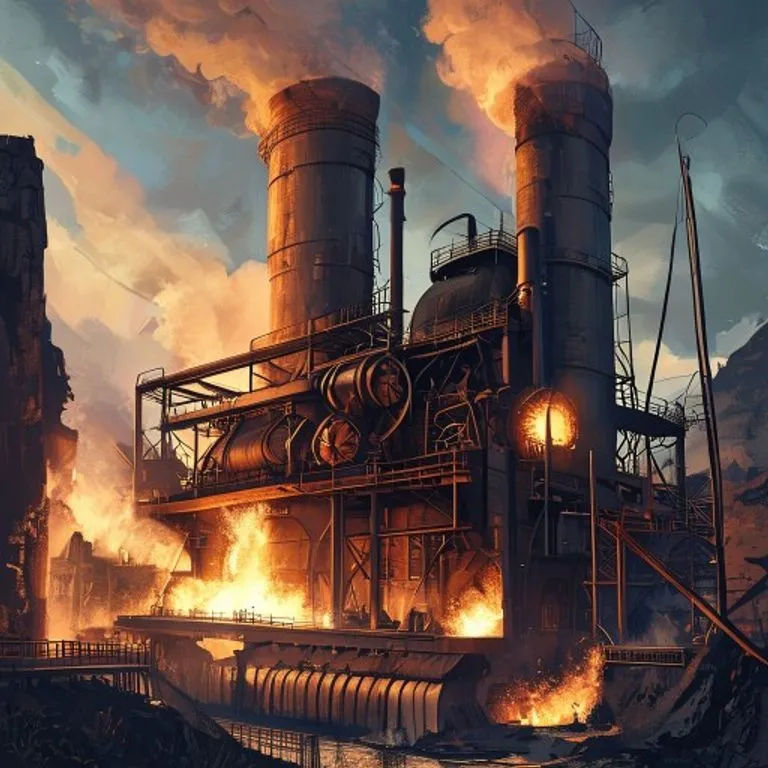
Brief description
A blast furnace is a large-scale industrial furnace used for smelting to produce industrial metals, generally iron, but also others such as lead or copper. It is characterized by the continuous “blasting” of pressurized air into the furnace to achieve extremely high temperatures.
Use / Function
- Large-scale iron production: Produces molten Pig Iron from iron ore.
- Continuous operation: Designed to run non-stop for months or years.
- Efficiency: Higher fuel efficiency and output compared to traditional bloomery furnaces.
Operating principle
The blast furnace is a chemical reactor that works through a counter-current process:
- Charging: Iron ore, Charcoal (or coke), and Limestone (flux) are fed into the top.
- The Blast: Pre-heated air is blown into the bottom through nozzles called tuyeres.
- Reduction: As the materials descend, they react with rising carbon monoxide gas. The limestone reacts with impurities to form liquid slag.
- Melting: At the hottest zone (the bottom), the iron melts and trickles down, accumulating in the hearth.
- Tapping: Molten iron and slag are periodically drained from the bottom.
How to create it
Minimum functional version
- The Stack: A tall, chimney-like structure built of heat-resistant Brick or Stone lined with refractory Clay.
- Air Supply: Large Bellows, often powered by a Water Wheel, to provide a constant air blast.
- The Hearth: A collection area at the base for the molten metal.
Required technological level
Advanced. Requires mastery of masonry, large-scale air supply systems, and deep understanding of metallurgy.
Materials needed
- Essential: Iron ore, Charcoal, Limestone.
- Construction: Refractory Clay, fire-bricks, heavy stone for the outer casing.
- Infrastructure: A reliable water source (for power), large bellows.
Variants and improvements
- Bloomery: The primitive predecessor that produces a solid “bloom” of iron rather than molten liquid.
- Hot Blast: Pre-heating the air before it enters the furnace, which drastically reduces fuel consumption.
- Modern Blast Furnace: Uses coke instead of charcoal and can reach massive sizes.
Limits and risks
- Explosions: If water enters the molten hearth, it can cause catastrophic steam explosions.
- Carbon Monoxide: The furnace produces large amounts of lethal, odorless CO gas.
- Extreme Heat: Requires specialized handling and protective equipment.
- Fuel Consumption: Requires massive amounts of wood/charcoal, which can lead to rapid deforestation if not managed.