NaturalGenerated with AI2 min read
Limestone
CaCO3
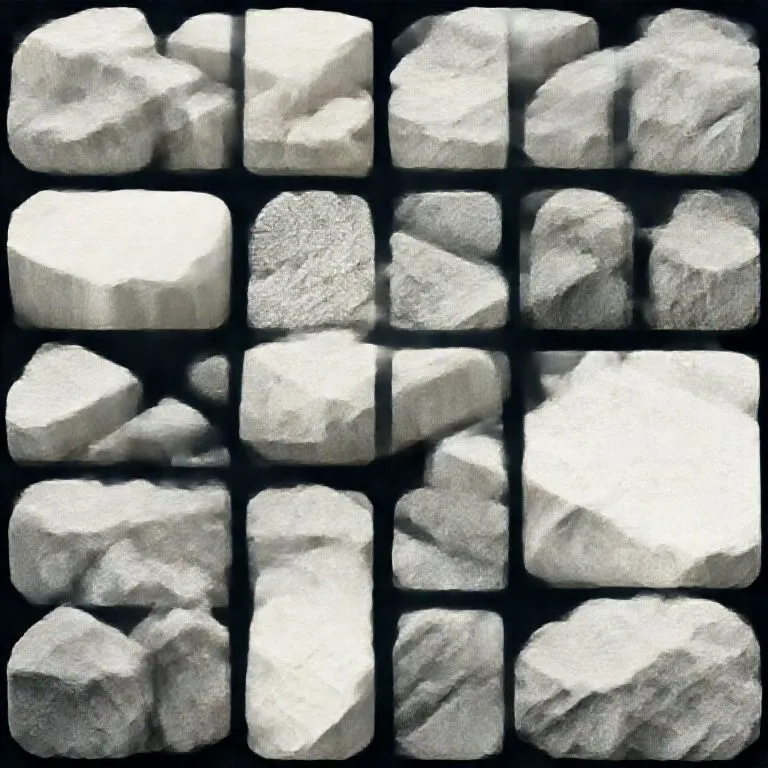
Limestone is a sedimentary rock composed mainly of calcium carbonate (CaCO3). It is one of the most useful and abundant minerals in history, serving as a building block and a chemical raw material.
Description of what it is like
- Appearance: Solid rock, usually white, gray, or beige.
- Texture: Can be fine-grained (chalk) or coarse-grained (fossiliferous).
- Reaction: Bubbles vigorously when in contact with acid (like vinegar).
Origin and where to find it
- Marine Environments: Formed from the accumulation of shells, coral, and algae debris in shallow seas over millions of years.
- Caves: Stalactites and stalagmites are limestone forms (travertine).
- Mountains: Many mountain ranges are uplifted seabeds rich in limestone.
Minimum processing required
- Quarrying: Extracted from the ground using picks, wedges, or explosives.
- Crushing: Broken down into smaller chunks for transport or processing.
- Cutting: Cut into blocks for construction.
Tools needed to work on it
- Pickaxe/Sledgehammer: For extraction.
- Chisel: For shaping blocks.
- Kiln: For converting it into lime (chemical use).
Common forms of use
- Blocks: As “dimension stone” for walls and buildings (e.g., the Pyramids).
- Crushed: As road base or aggregate for concrete.
- Powder: As agricultural lime to fix acidic soil.
- Raw Material: Burnt to make Quicklime (CaO).
Possible substitutes
- Sandstone/Granite: For construction (harder to work).
- Wood: For building (less durable).
- Seashells: Can be burnt to make lime if rock limestone is unavailable.
Limitations and common failures
- Acid Rain: Dissolves slowly over time in acidic environments.
- Softness: Not as hard as granite; wears down in high-traffic areas.
Risks and safety
- Dust: Inhalation of limestone dust can cause respiratory irritation.
- Heavy Lifting: Blocks are extremely heavy.
Related materials
- Lime: Produced by burning limestone.
- Marble: Metamorphosed limestone (harder, shinier).
- Chalk: Soft, porous limestone.
Properties
- Sedimentary
- Alkaline
- Soft
- Abundant
Used for
- Lime production
- Construction stone
- Flux (Metallurgy)
- Glass making
- Agriculture
Manufacturing / Process
Sedimentation of marine organisms (natural).