Generated with AI3 min read
Ball Mill
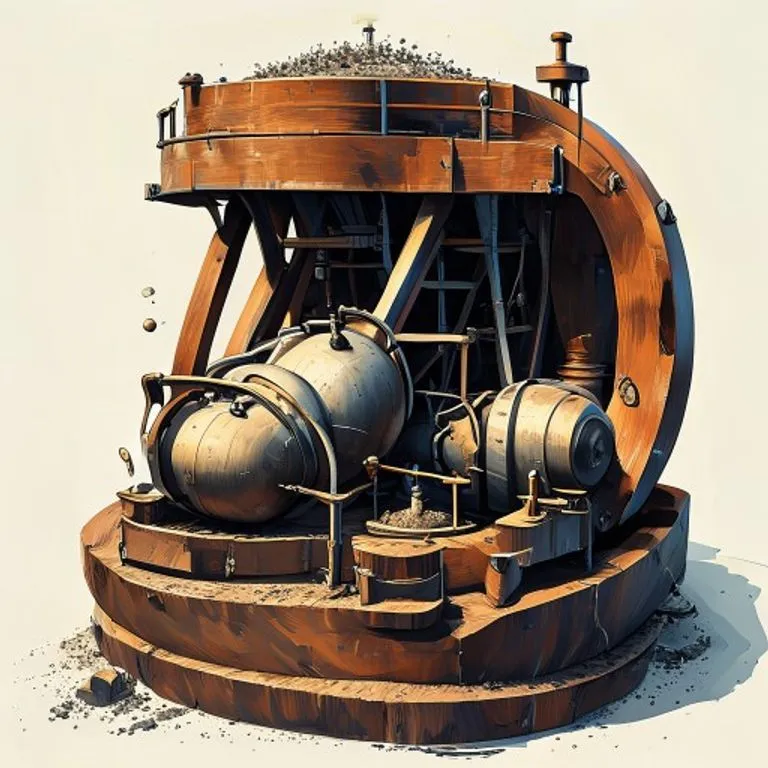
Brief description
A ball mill is a type of grinder used to grind, blend and sometimes mix materials for use in mineral dressing processes, paints, pyrotechnics, ceramics, and selective laser sintering. It works on the principle of impact and attrition: size reduction is done by impact as the balls drop from near the top of the shell.
Use / Function
- Cement Production: Grinding clinker (burnt limestone/clay nodules) into fine cement powder.
- Mining: Pulverizing ores to extract metals (gold, copper).
- Ceramics: Grinding clay and glazes.
- Pyrotechnics: Mixing black powder ingredients safely (using non-sparking media like lead or brass).
Operating principle
The mill consists of a hollow cylindrical shell rotating about its horizontal axis. It is partially filled with the material to be ground plus the grinding medium (balls). As the shell rotates, the balls are lifted up on the rising side of the shell and then they cascade down (or drop down on to the feed), crushing the solid material between the balls and against the wall.
How to create it
- Cylinder: Construct a sturdy drum (steel pipe or reinforced wooden barrel).
- Drive Mechanism: Connect the drum to a motor, water wheel, or hand crank via gears or belts to rotate it at a specific speed (critical speed).
- Grinding Media: Fill the drum 30-50% with hard balls (steel, iron, ceramic, or hard rounded stones).
- Lining: Ideally, line the inside with rubber or hard steel to prevent wear on the drum itself.
Materials needed
- Drum: Steel, iron, or hard wood.
- Media: Steel balls, ceramic balls, or flint pebbles.
- Drive: Motor, water wheel, or animal power.
Variants and improvements
- Rod Mill: Uses long steel rods instead of balls; produces a coarser product.
- Pebble Mill: Uses natural stones (flint) to avoid iron contamination (crucial for white ceramics).
- Continuous Mill: Material is fed in one end and discharges at the other.
Limits and risks
- Critical Speed: If it spins too fast, the balls stick to the wall (centrifuge) and don’t grind. If too slow, they just slide.
- Noise: Extremely loud; requires hearing protection.
- Wear: The balls and liner wear out, contaminating the product with iron (problematic for some chemical processes).
- Energy: Requires significant power to turn the heavy load.
Related inventions
- Kiln: Often precedes the mill in cement/lime production.
- Water Wheel: A common power source for pre-industrial mills.
- Gears: To reduce speed and increase torque.