Generated with AI2 min read
Gutter
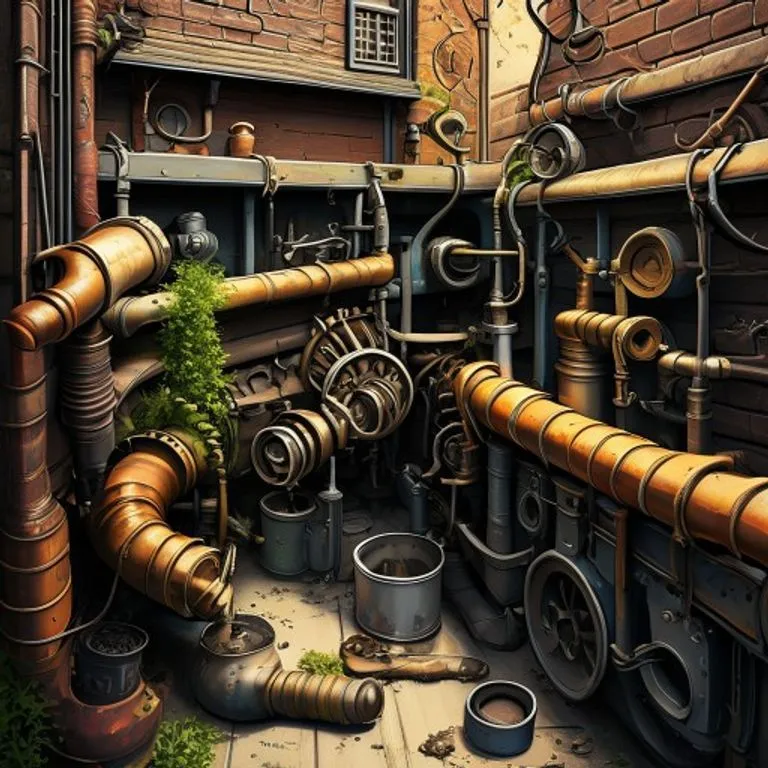
Brief description
A shallow trough or channel designed to collect and carry away water, typically found at the side of a road or the edge of a roof.
Use / Function
- Primary use: Road drainage to prevent water accumulation that could wash away the road base or cause hydroplaning.
- Secondary uses: Roof drainage (protecting foundations from water damage), irrigation channels.
- Scale: From small residential paths to major highways.
Operating principle
- Gravity Flow: Gutters rely on a slight downward slope (gradient) to move water from high points to discharge areas (drains, soakaways, or natural waterways).
- Containment: The channel shape keeps water confined, preventing it from spreading over the road surface or eroding the surrounding soil.
How to create it
Road Gutter (Basic)
- Survey: Determine the slope and direction of water flow alongside the road.
- Excavation: Dig a trench parallel to the road using shovels and pickaxes.
- Shaping: Shape the trench (V-shaped or U-shaped) to facilitate flow.
- Lining (Optional but recommended): Line with stones, concrete, or compacted earth to prevent erosion and improve flow.
Roof Gutter (Advanced)
- Fabrication: Form channels from metal, wood (lined), or plastic.
- Installation: Attach to the roof eaves with a slight slope towards a downspout.
Materials needed
- Essential: Shovel, Pickaxe.
- Lining: Stone (cobbles), Concrete, or simply compacted earth.
- Roof Gutters: Lead, Copper, Zinc, or Wood.
Variants and improvements
- Earth Ditch: Simple unlined trench (prone to erosion/clogging).
- Lined Gutter: Stone or concrete lining for durability and smoother flow.
- Box Gutter: Rectangular gutter built into a roof structure.
- Curb and Gutter: Modern concrete combination defining the road edge and carrying water.
Limits and risks
- Clogging: Accumulation of leaves, dirt, and debris can block flow, causing overflow.
- Erosion: High-speed water flow can erode unlined gutters.
- Stagnation: Poor slope leads to standing water, breeding mosquitoes and causing smells.