NaturalGenerated with AI3 min read
Slate
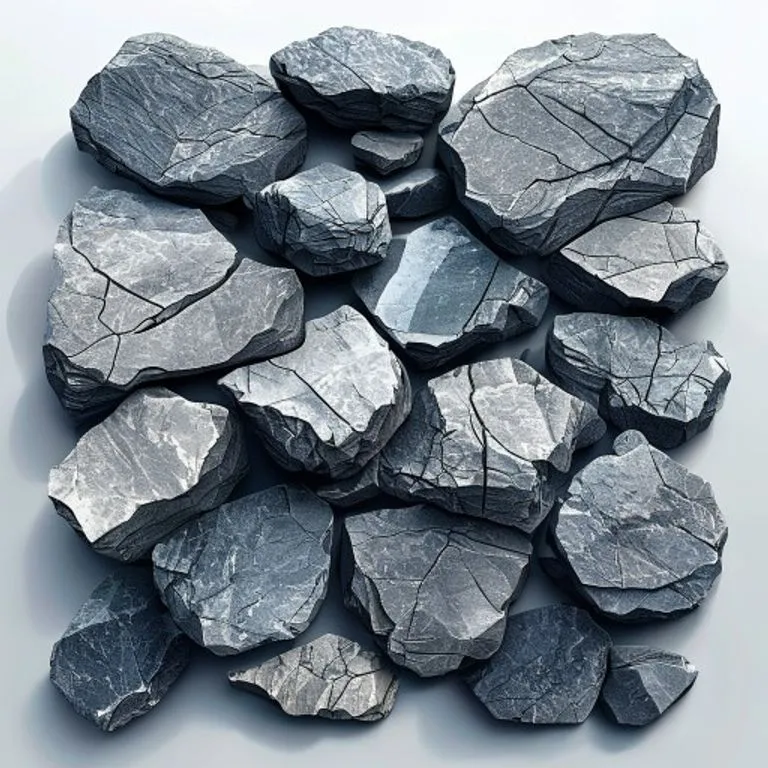
Slate is a fine-grained, foliated metamorphic rock that is created by the alteration of shale or mudstone by low-grade regional metamorphism. It is famous for its ability to split into thin, flat sheets (fissility).
Description of what it is like
- Appearance: Typically gray, ranging from pale to dark charcoal, but can also be purple, green, or cyan depending on mineral content. It has a dull to silky luster.
- Texture: Smooth and flat when split.
- Hardness: Hard enough to resist scratching by fingernails, but soft enough to be shaped.
Origin and where to find it
- Origin: Formed from clay-rich sediments (shale) subjected to heat and pressure over millions of years.
- Location: Found in mountainous regions with a history of tectonic activity (e.g., Wales, Spain, Brazil, Vermont/USA).
- Recognition: Look for rock outcrops that naturally break into flat plates.
Minimum processing required
- Quarrying: Extract large blocks from the ground (blasting is avoided to prevent shattering).
- Splitting (Riving): While the rock is still “quarry sap” fresh (containing natural moisture), split the blocks along their natural cleavage planes using a chisel and mallet. It becomes much harder to split once dry.
- Trimming: Cut the split sheets into desired shapes (rectangles for roofing) using a dressing knife or machine.
- Punching: Create holes for nails (for roofing).
Tools needed to work on it
- Splitting Chisel (Betel): A wide, flat chisel used to wedge the layers apart.
- Mallet: For striking the chisel.
- Dressing Knife (Zax): A heavy, blade-like tool with a point for punching holes and an edge for trimming the slate.
- Break Iron: A straight metal edge used as a rest for trimming.
Common forms of use
- Roofing Tiles: Overlapped to create a watertight, extremely durable roof.
- Flooring/Paving: Durable, non-slip surface.
- Writing Slates: Historically used with chalk for schoolwork.
- Billiard Tables: The bed of the table is made of thick, ground slate for perfect flatness.
- Electrical Panels: Older switchboards used slate because it is an electrical insulator and fireproof.
Possible substitutes
- Tile (Ceramic/Concrete): Cheaper and easier to manufacture, but heavier and less durable.
- Wood Shingles: Lighter but flammable and rot-prone.
- Metal: Lighter, but different aesthetic and thermal properties.
- Synthetic Slate: Rubber or plastic composites (modern).
Limitations and common failures
- Weight: Slate is very heavy; roof structures must be reinforced.
- Brittleness: Can crack if walked on or impacted by heavy hail.
- Nail Sickness: The iron nails holding the slates may rust and fail long before the slate itself does (copper or stainless steel nails prevent this).
- Delamination: Poor quality slate with high pyrite content can rust and flake over time.
Risks and safety
- Sharp Edges: Freshly split slate is razor-sharp and can cause deep cuts.
- Silica Dust: Cutting or grinding slate produces respirable silica dust (silicosis risk).
- Falling: Working with heavy materials at height (roofing) carries fall risks.
Related inventions
- Roofing: The primary application.
- Frame: Essential structural support for heavy slate roofs.
- Masonry: Slate is often used in dry stone walls.
- Stone Tools
Related materials
Properties
- Fissility
- Water resistance
- Fire resistance
- Durability
- Chemical inertness
Used for
- Roofing
- Flooring
- Writing tablets
- Billiard tables
- Electrical insulation
Manufacturing / Process
Quarrying, splitting along cleavage planes, and trimming to shape.