Generated with AI3 min read
Chimney
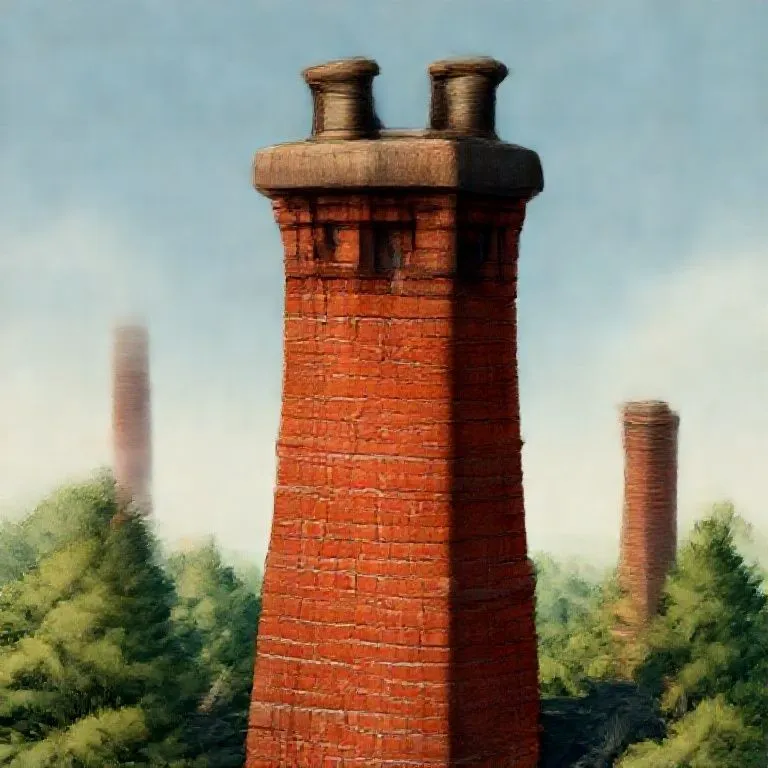
Brief description
A vertical structure designed to evacuate smoke and hot gases produced by a fire to the outside of a home or building. In addition to removing smoke, its critical function is to generate “draft” (airflow) that feeds the fire with oxygen.
Use / Function
Its purpose is twofold: safety (evacuating toxic gases) and efficiency (improving combustion).
- Primary use: Smoke evacuation from fireplaces, stoves, and kilns.
- Secondary use: Passive ventilation of spaces when there is no fire.
- Scale: From domestic (cooking/heating) to industrial (smelting furnaces).
Operating principle
It is based on the stack effect (natural convection):
- Hot combustion gases are less dense than the cold outside air.
- This density difference causes the hot air to rise up the flue.
- As it rises, it creates a low-pressure zone at the base (the firebox).
- This low pressure sucks fresh air from the room into the fire, providing the oxygen necessary to maintain combustion.
The taller the chimney and the greater the temperature difference, the stronger the draft.
How to create it
Minimum functional version
A simple vertical tube of non-combustible material. However, an efficient chimney requires design:
- Firebox: Where the fire burns.
- Throat: Narrowing above the firebox to accelerate gases and prevent smoke backdraft.
- Smoke chamber: Transition zone that directs smoke into the flue.
- Flue: The vertical channel. It should be as straight and smooth as possible.
- Cap: Top protection to prevent rain or downdrafts from entering.
Required technical level
Intermediate. Requires masonry knowledge and precise proportions to prevent smoke from returning to the room.
Materials needed
- Essential:
- Brick: Preferably refractory for the firebox, or high-quality fired brick.
- Mortar: Heat resistant (clay/sand mixture or refractory cement).
- Tools:
- Trowel, plumb line (very important for verticality), level.
Variants and improvements
- Clay chimney: Prefabricated ceramic tubes.
- Rumford chimney: 18th-century design with a tall, shallow firebox that maximizes heat radiation into the room and improves draft.
- Insulation: Insulating the flue keeps gases hot longer, improving draft and reducing creosote condensation.
Limits and risks
- Smoke backdraft: If the flue is too short, too wide, or there is strong wind, smoke can re-enter.
- Chimney fire: The accumulation of soot and creosote (flammable residues) on the flue walls can catch fire, reaching extreme temperatures that can destroy the structure. Periodic cleaning is required.
- Carbon monoxide: A blocked or poorly designed chimney can introduce this deadly, invisible gas into the home.