Generated with AI3 min read
Silver Mirror
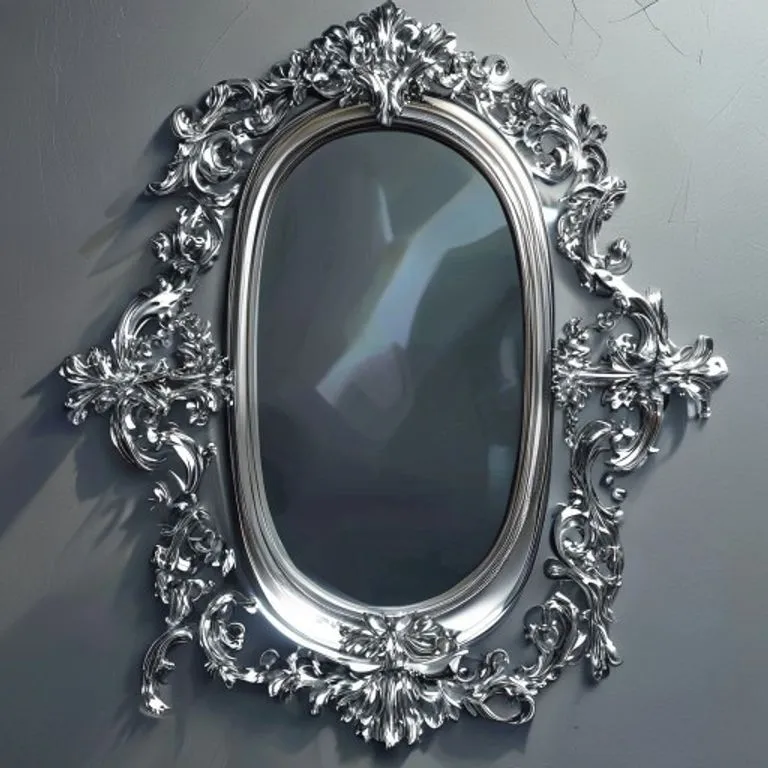
Brief description
A silver mirror is a type of modern mirror that uses a thin layer of metallic silver deposited onto a glass substrate through a chemical process. It is the most common type of domestic mirror due to its high reflectivity and clarity.
Use / Function
Its primary purpose is to provide a high-quality reflection for various applications:
- Domestic: Grooming, dressing, and interior decoration to enhance light and space.
- Precision Optics: Used in scientific instruments, although often replaced by aluminized mirrors for specific wavelengths.
- Architectural: Cladding and decorative panels in buildings.
- Scale: Mass-produced, domestic and commercial use.
Related Inventions
Related Materials
Operating principle
The silver mirror operates on the principle of chemical silvering (the Tollens’ reaction):
- Chemical Precipitation: Silver nitrate in an aqueous solution is reduced to metallic silver by a reducing agent (like glucose).
- Adhesion: The silver atoms precipitate out of the solution and bond directly to a sensitized glass surface.
- Specular Reflection: The resulting thin, uniform layer of silver is extremely smooth, allowing for nearly perfect specular reflection of visible light.
How to create it
Creating a silver mirror is an advanced chemical process that requires precision:
- Preparation: A sheet of high-quality glass is meticulously cleaned to remove all oils and impurities.
- Sensitization: The glass is treated with a tin(II) chloride solution, which acts as a “bridge” to help the silver adhere.
- Silvering: A solution of silver nitrate and ammonia is mixed with a reducing solution (glucose or formaldehyde) and poured over the glass.
- Backing: After the silver layer forms and dries, it is covered with a layer of copper (optional) and then a layer of protective paint to prevent oxidation and physical damage.
- Technical Level: Advanced (requires handling of specific chemicals and a controlled environment).
Materials needed
- Essential:
- Glass: Flat, high-quality substrate.
- Silver Nitrate: The source of silver.
- Ammonia: To keep the silver in solution.
- Glucose: Reducing agent.
- Tin(II) Chloride: Sensitizer.
- Distilled Water: For pure solutions.
- Tools: Level pouring table, sprayers or containers for chemicals, protective gear (gloves, goggles).
- Possible Substitutes: Aluminum (applied via vacuum deposition) for industrial mirrors, or mercury amalgams (antique and toxic).
Variants and improvements
- Mercury Mirrors: The predecessor to silver mirrors, using a toxic tin-mercury amalgam.
- Copper-Free Mirrors: Modern improvement that eliminates the copper layer to reduce environmental impact and improve corrosion resistance.
- First-Surface Mirrors: The silver is on the front of the glass (used in optics) to avoid ghosting images, but it is very fragile.
Limits and risks
- Oxidation (Black Edge): If moisture reaches the silver layer, it can oxidize, creating dark spots or “rot” at the edges.
- Fragility: Like all glass products, it is prone to breaking and thermal shock.
- Chemical Safety: Silver nitrate can stain skin and surfaces; ammonia fumes are irritating.
- Ghosting: In standard second-surface mirrors, a faint secondary reflection occurs from the front surface of the glass.