Generated with AI3 min read
Carburetor
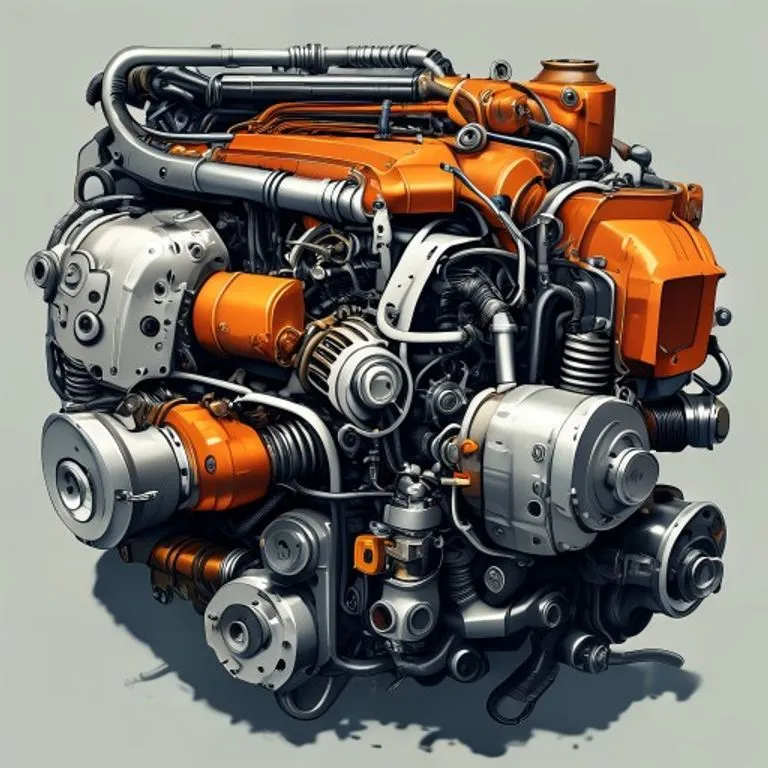
Brief description
A carburetor is a device that mixes air and fuel for internal combustion engines in the proper air–fuel ratio for combustion. It relies on the physics of air pressure and fluid dynamics to automate the delivery of fuel.
Use / Function
- Engine Performance: Ensuring the engine receives the correct mixture of air and fuel to run efficiently across different speeds and loads.
- Starting: Providing a “rich” mixture (more fuel) to help an engine start when cold (via the choke).
- Speed Control: Regulating the amount of mixture entering the engine to control its speed (via the throttle).
Operating principle
The carburetor works on the Venturi Principle:
- Air Intake: As the engine’s pistons move down, air is sucked into the carburetor’s intake.
- Venturi Effect: The air passes through a narrowed section of the pipe (the venturi), which causes the air to speed up and its pressure to drop.
- Fuel Suction: This low pressure creates a vacuum that sucks fuel from a reservoir (the float bowl) through a small nozzle (the jet).
- Atomization: The fuel is sprayed into the fast-moving air stream, breaking into tiny droplets (atomizing) so it can burn easily in the engine.
- Throttle Valve: A butterfly valve at the exit of the carburetor controls how much of the air-fuel mixture enters the engine, thereby controlling the engine’s power output.
How to create it
1. The Body
- Cast or machine a tube with a narrowed section (the venturi). Aluminum or Brass are ideal as they are easy to work and won’t spark easily.
2. Float System
- Create a reservoir (float bowl) to hold a constant level of fuel.
- Use a float (made of Cork or hollow metal) connected to a needle Valve to shut off the fuel flow from the tank when the bowl is full.
3. Jets and Nozzles
- Drill very precise, tiny holes (jets) to control the fuel flow. The size of these holes determines the air-fuel ratio.
- Use Brass for jets as it resists corrosion from fuel.
4. Throttle and Choke
- Install two pivoting plates (butterfly valves).
- The Throttle is near the engine side to control speed.
- The Choke is near the air intake side to restrict air and richen the mixture for starting.
Materials needed
- Aluminum or Brass: For the main body and components.
- Copper: For fuel lines and small fittings.
- Steel: For the throttle and choke shafts.
- Natural Rubber or specialized gaskets: To seal the float bowl and mounting surfaces.
Variants and improvements
- Fuel Injection: A modern, electronically controlled system that replaces the carburetor for better efficiency and lower emissions.
- Multi-barrel Carburetors: Use multiple venturis to provide better airflow at high speeds.
- Diaphragm Carburetor: Uses a flexible membrane instead of a float, allowing the engine to run in any orientation (common in chainsaws).
Limits and risks
- Icing: The drop in pressure and evaporation of fuel can cause the carburetor to freeze up in cold, humid weather.
- Clogging: Tiny jets can easily be blocked by dirt or old fuel deposits.
- Fire Risk: A backfire from the engine can ignite fuel in the carburetor.
- Altitude Sensitivity: As air gets thinner at high altitudes, the mixture becomes too rich, requiring adjustment (re-jetting).
Related Inventions
- Internal Combustion Engine
- Valve
- Pump (Fuel pump)