NaturalGenerated with AI2 min read
Sand
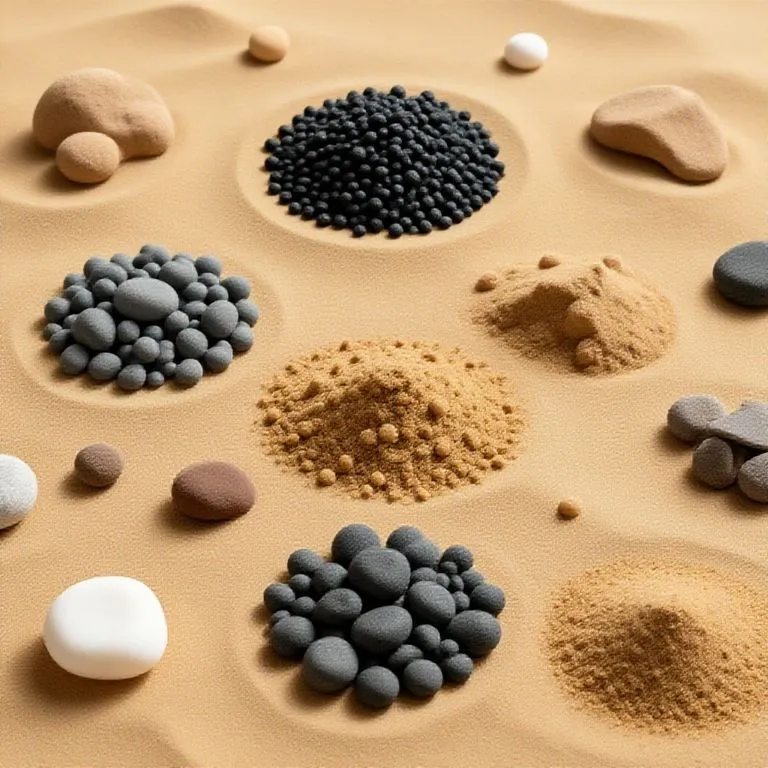
Sand is a granular material composed of finely divided rock and mineral particles. It is defined by size, being finer than gravel and coarser than silt.
Description of what it is like
Sand consists of small, loose grains. It is gritty to the touch and flows easily when dry. Its color depends on the source minerals (usually quartz, giving it a tan or white color).
Origin and where to find it
- Environments: Deserts, beaches, riverbeds, and dunes.
- Signs: Vast expanses of loose, granular material.
- It is a natural material.
Minimum processing required
- Collection: Digging or scooping.
- Sieving/Screening: Separating by grain size and removing debris.
- Washing: Removing salts (especially for beach sand) and organic matter.
Tools needed to work on it
- Shovels and buckets for collection.
- Screens and sieves of various mesh sizes.
- Containers for washing.
Common forms of use
- Raw: As a weight or for traction.
- Processed: As a component in mortar, concrete, or plaster.
- Melted: To produce glass.
Possible substitutes
- Crushed Stone: Can replace sand in construction.
- Slag: Industrial byproduct used as a sand substitute.
- Other Granular Materials: Like walnut shells for some abrasive uses.
Limitations and common failures
- Lack of Cohesion: Does not hold shape on its own unless wet.
- Erosion: Easily moved by wind and water.
- Impurities: Salts in beach sand can weaken concrete.
Risks and safety
- Respiratory: Inhaling fine silica dust (sand) can cause silicosis.
- Eye Irritant: Grains can easily enter and irritate eyes.
Related materials
- Stone: The source of sand through erosion.
- Glass: Made by melting sand.
- Clay: Often found mixed with sand in soil.
Properties
- Granular
- Abrasive
- Heat resistant
- Permeable
Used for
- Construction
- Glass making
- Abrasive cleaning
- Filtration
Manufacturing / Process
Found naturally as a result of the erosion of rocks.