SyntheticGenerated with AI3 min read
Blue Cheese
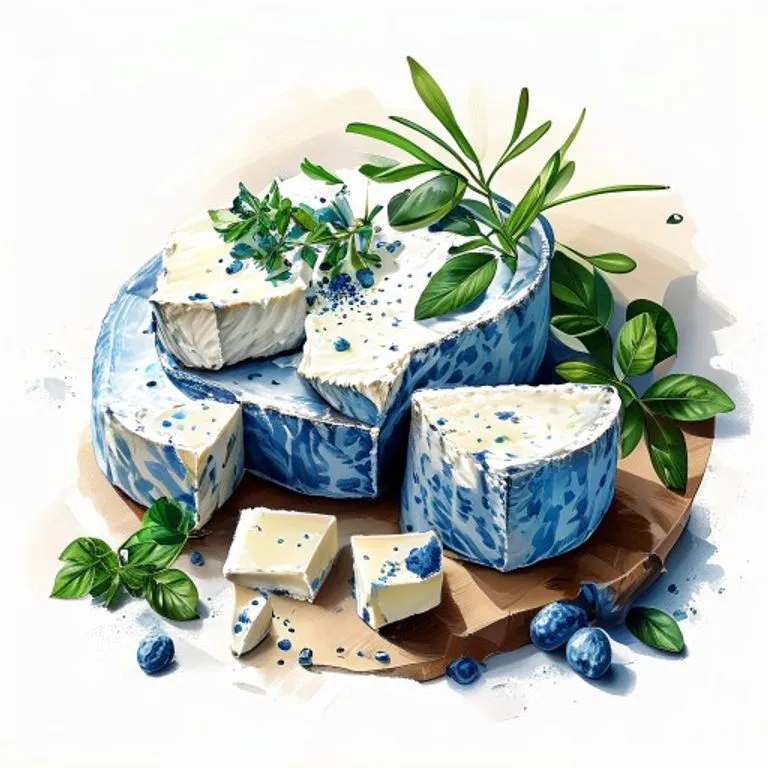
Blue cheese is an aged dairy product in which selected molds create blue-green veins and strong aromas. It concentrates milk into a high-flavor, long-lasting food that stores well when kept cool and humid.
Description of what it is like
Texture ranges from creamy and spreadable to crumbly and firm depending on moisture and aging. The flavor is salty, sharp, and complex, with a distinctive earthy aroma from the mold.
Origin and where to find it
- Environments: Produced wherever milk is available and aging spaces stay cool and humid, such as caves, cellars, or shaded rooms.
- Signs: Pierced wheels, blue-green veining, and a pungent aroma during aging.
- It is a processed material.
Minimum processing required
- Curd base: Make curd from milk using acid or Enzymes and drain.
- Salting: Salt the curd to control moisture and inhibit unwanted microbes.
- Inoculation: Mix in blue mold culture or introduce spores from Fungi.
- Piercing: Puncture to allow airflow so the mold can develop.
- Aging: Mature in a cool, humid place until flavor and texture stabilize.
- If skipped: Poor salting or ventilation leads to spoilage or unwanted mold.
Tools needed to work on it
- Vessels: Clean Containers or Clay pots.
- Cloth: Fabric for draining and wrapping.
- Piercing tools: Skewers or thin rods for airflow channels.
- Aging space: Cool shelf or Wood boards with controlled humidity.
Common forms of use
- Crumbled as a seasoning for stews and grains.
- Melted into sauces or spreads.
- Eaten as a high-energy travel food in small amounts.
Possible substitutes
- Aged Cheese when blue mold is unavailable.
- Smoked or dried meats for strong flavor and preservation.
Limitations and common failures
- Overgrowth: Excess humidity creates slimy surfaces and bitter flavors.
- Drying: Too little humidity cracks the rind and stalls mold.
- Contamination: Unclean tools cause off-flavors or spoilage.
Risks and safety
- Allergies: Mold-sensitive people may react to spores.
- Foodborne illness: Raw milk or poor hygiene can carry pathogens.
- Histamine: Strongly aged cheeses can trigger sensitivity.
Related materials
- Curd & Cheese: Base curd process and early stages.
- Cheese: Broader category of aged cheeses.
- Living Cheese: Culture-ripened cheeses with active rinds.
- Unripened Cheese: Fresh curd without aging.
- Enzymes: Coagulation catalysts for curd.
- Salt: Controls moisture and spoilage.
- Water: Cleaning, brining, and humidity control.
- Fungi: Source of mold cultures.
- Fabric: Draining and wrapping.
- Wood: Aging boards and shelving.
Properties
- Mold-ripened
- Salty
- Aromatic
- Creamy
- Crumbly
Used for
- Food
- Cooking ingredient
- Seasoning
- Trade good
- Preservation
Manufacturing / Process
Inoculating salted curd with blue mold, piercing for airflow, and aging in cool, humid conditions.