Generated with AI3 min read
Paints & Brushes
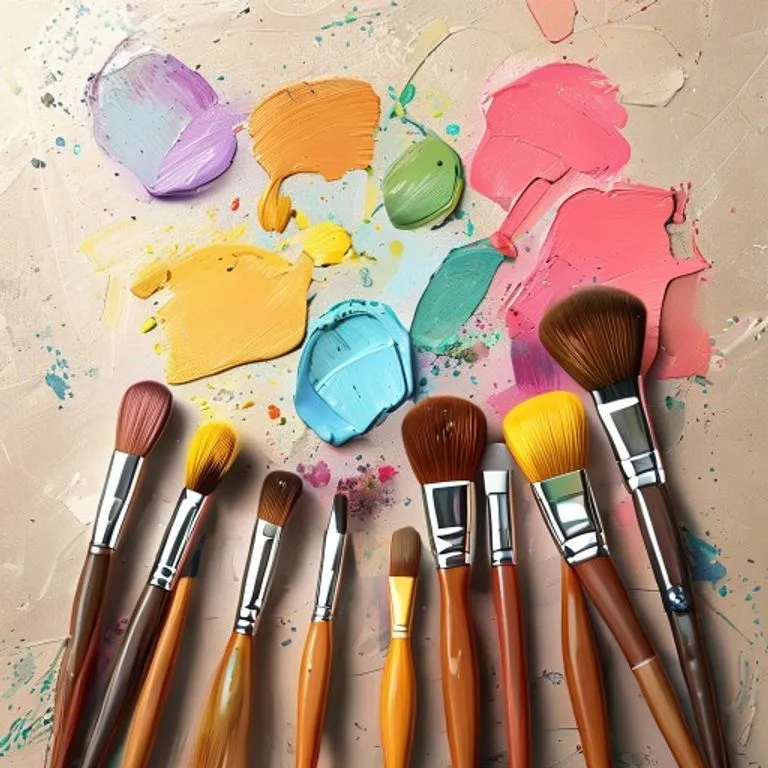
Brief description
Paints & Brushes is the practical knowledge of preparing color, mixing binders, and applying controlled strokes to surfaces for protection, signaling, decoration, and information.
Use / Function
- Surface protection: Seal wood, plaster, or stone with Paint to reduce weathering.
- Communication: Marks, symbols, maps, and warnings made with Ink or paint.
- Decoration and craft: Art, ornament, and pattern work on Canvas, wood, or plaster.
- Process support: Controlled application of binders like Glue or Resin.
Operating principle
- Pigment suspension: Pigments are dispersed into a binder to stick to surfaces.
- Flow control: Water or solvent sets viscosity for stroke width and coverage.
- Bristle action: A Brush holds liquid in bristles and releases it through capillary action.
- Surface adhesion: Clean, slightly porous surfaces grab the binder and lock pigment.
How to create it
- Prepare pigment: Grind and wash Pigments until smooth and fine.
- Choose a binder: Oil, glue, or gum based on surface and drying speed.
- Mix to consistency: Add Water or solvent slowly until the paint flows without dripping.
- Build a brush: Use Wood for a handle and Animal Hair or Plant fibers for bristles.
- Test strokes: Try on scrap to confirm opacity, drying, and flow.
- Apply and cure: Use thin layers, allowing full drying between coats.
Required technological level
Basic to intermediate. Good results need clean mixing and steady hand skills.
Materials needed
- Essential: Pigments, binder (oil, Glue, or Resin), Water, Brush.
- Tools: Grinding stone, mixing slab, containers, String for binding bristles.
- Surfaces: Canvas, wood, plastered walls.
Variants and improvements
- Wall painting: Use lime or gypsum preparation with Painting Walls.
- Fine work: Softer hair for calligraphy and detail.
- Textile application: Thickened dye with Fabric Dyeing methods.
- Durable coats: Multiple thin layers with proper drying reduce cracking.
Limits and risks
- Peeling and cracking: Poor surface prep or too-thick coats fail.
- Toxic pigments and solvents: Many colors are hazardous; avoid inhalation and skin contact.
- Brush damage: Dried paint ruins bristles; clean immediately.
- Weather exposure: Unsealed surfaces fade and chalk over time.
Related materials
- Paint: Primary coating for protection and color.
- Pigments: Color sources for paint and ink.
- Ink: Thin colorant for writing and fine marks.
- Glue: Common binder and surface sizing.
- Resin: Natural binder and sealer.
- Wood: Common substrate and brush handle material.
- Animal Hair: Preferred bristle material.
- Plant fibers: Alternative bristles and bindings.
- String: Bristle binding and lashings.
- Water: Thinner and cleanup solvent.
- Canvas: Standard painting surface.
Related inventions
- Brush: Primary tool for controlled strokes.
- Painting Walls: Surface prep and large-area coating.
- Fabric Dyeing: Color applied to textiles.