SyntheticGenerated with AI3 min read
Ink
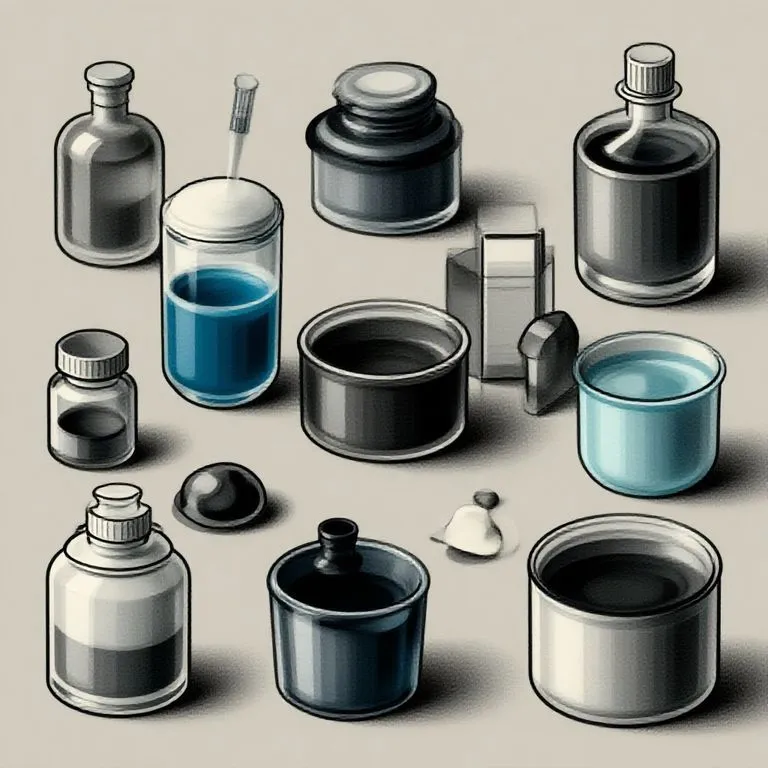
Ink is a liquid or paste that contains pigments or dyes and is used to color a surface to produce an image, text, or design.
Description of what it is like
Ink is usually a dark liquid, though it can come in many colors. It is designed to flow smoothly from a tool (like a pen or brush) and adhere to a surface (like paper or skin). Once applied, it should dry relatively quickly to prevent smearing.
Origin and where to find it
- Environments: It is a manufactured product, created by combining materials from various environments.
- Signs: Historically, the first inks were made from lampblack (soot) or charred bones.
- It is a synthetic/processed material.
Minimum processing required
- Pigment preparation: Grinding charcoal or collecting soot from a flame.
- Binder addition: Mixing the pigment with a sticky substance (gum arabic from acacia trees, or egg white) to help it stick to the surface.
- Solvent mixing: Adding water or oil to achieve the desired consistency.
- Filtration: Ensuring the liquid is free of large particles that could clog tools.
Tools needed to work on it
- Mortar and pestle for grinding.
- Mixing containers.
- Fine strainers or cloth for filtering.
- Storage vials or inkwells.
Common forms of use
- Carbon ink: Made from soot and binders (India ink).
- Iron gall ink: Made from iron salts and tannic acids from vegetable sources.
- Modern inks: Complex chemical formulations for specific printers or pens.
Possible substitutes
- Berry juices: For temporary stains.
- Blood: Historically used in emergencies.
- Charred sticks: Can be used directly, though less permanent than liquid ink.
Limitations and common failures
- Smudging: If the ink dries too slowly or the surface is not absorbent.
- Fading: Some inks (especially vegetable dyes) fade when exposed to sunlight.
- Clogging: If the pigment particles are too large or the binder dries in the tool.
Risks and safety
- Toxicity: Some historical inks used heavy metals (like lead or mercury); modern inks are generally safer but should not be ingested.
- Permanent stains: Difficult to remove from clothing or skin.
Related materials
Properties
- Liquid
- Staining
- Fast-drying
- Permanent
Used for
- Writing
- Printing
- Art
- Tattooing
Manufacturing / Process
Mixing a pigment (like charcoal or soot) with a binder (like gum arabic, egg white, or honey) and a solvent (like water or oil).