Generated with AI2 min read
Wooden Pavement
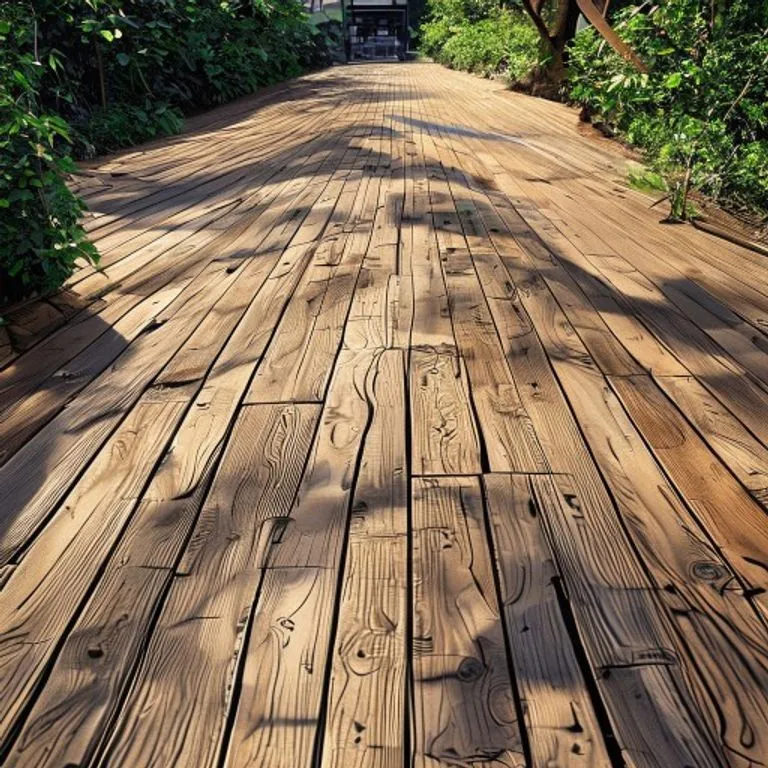
Brief description
A road surfacing method using rectangular wooden blocks, usually set with the grain vertical (end-grain), placed on a solid foundation. It was popular in 19th-century cities for being quieter and smoother than cobblestones.
Use / Function
- Primary use: Urban street paving to reduce noise from horses’ hooves and iron carriage wheels.
- Secondary uses: Interior industrial flooring (absorbs impact), bridge decks (lighter than stone).
- Scale: City streets, bridges, factory floors.
Operating principle
- Shock Absorption: Wood is softer than stone, cushioning impacts and dampening sound.
- End-Grain Durability: Placing wood blocks with the grain vertical makes them much more resistant to wear and splitting than placing them flat.
- Traction: Provides good grip when dry, though can be slippery when wet.
How to create it
- Foundation: Prepare a stable base. Historically, this was often a layer of planks or, better, a concrete slab.
- Preparation: Cut wood into uniform rectangular blocks (e.g., 15x8x15 cm). Hardwoods or resinous softwoods are best.
- Treatment: Dip blocks in boiling tar or creosote to preserve them and prevent rot.
- Laying: Place blocks in rows on the foundation with the end grain facing up. Leave small gaps (2-3 mm) between rows for expansion.
- Jointing: Pour hot tar or bitumen into the gaps and cover with fine gravel or sand to seal the surface and provide grip.
Materials needed
- Essential:
- Foundation:
- Tools:
Variants and improvements
- Nicholson Pavement: An early US version using a plank foundation and tar.
- Creosoted Blocks: Pressure-treated wood for longer life against rot.
- Interior Block Paving: Used in factories to protect dropped tools and reduce worker fatigue.
Limits and risks
- Slippery when wet: Became notoriously slippery for horses in rain.
- Expansion: Wood swells when wet; if not spaced correctly, the road surface could buckle or push over curbstones.
- Sanitation: Wood is porous and absorbs urine and waste from animals, leading to bad smells in warm weather.
- Rot: Even with tar, wood eventually decays.
Related inventions
- Road: General concept.
- Cobblestone Path: The competitor it replaced in some wealthy districts.
- Macadam: Alternative paving method.