Generated with AI3 min read
Saw
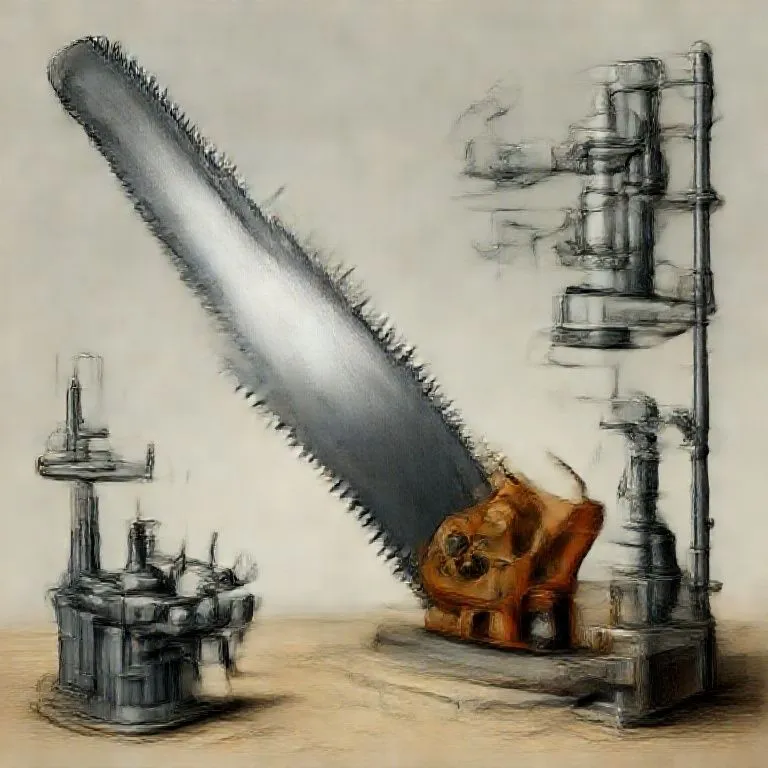
Brief description
A tool consisting of a tough blade, wire, or chain with a hard toothed edge. It is used to cut through material, most often wood, although sometimes metal or stone.
Use / Function
Its practical purpose is to cut materials into desired shapes and sizes.
- Primary use: Cutting wood for construction, fuel, or carpentry.
- Secondary uses: Cutting metal (hacksaw), stone (masonry saw), or bone (surgery).
- Scale: From small precision work to large-scale forestry.
Operating principle
The saw works by abrasion or cutting. The teeth of the saw act as a series of small knives or chisels.
- Mechanical Action: When the saw is moved back and forth (reciprocating motion), each tooth removes a small amount of material.
- Kerf: The cut made by the saw is called a kerf. The teeth are often “set” (bent alternately to the left and right) to make the kerf wider than the blade, preventing it from binding.
How to create it
Minimum functional version
A jagged edge on a hard material.
- Stone Age: A piece of flint or obsidian with a serrated edge (denticulation).
- Iron/Steel Age: A metal strip with teeth filed into one edge.
Fabrication steps (Metal Saw)
- Forging: Shape a flat bar of iron or steel.
- Toothing: Use a chisel or file to cut teeth into one edge.
- Setting: Bend the teeth slightly in alternating directions (one left, one right) to create clearance for the blade.
- Hardening: Heat and quench the blade (especially the teeth) to keep it sharp.
- Hafting: Attach a wooden handle for grip.
Materials needed
- Essential materials:
- Blade: Iron, Steel (best for durability), or Flint/Obsidian (primitive).
- Handle: Wood, Bone, or Antler.
- Tools:
- File: To sharpen the teeth.
- Hammer & Anvil: To shape the blade.
- Pliers/Wrench: To set the teeth.
Variants and improvements
- Hand Saw: General purpose woodworking.
- Crosscut Saw: Two-man saw for felling large trees.
- Hacksaw: Fine teeth for cutting metal.
- Bow Saw: A thin blade held in tension by a frame.
- Chainsaw: Modern powered variant with a rotating chain.
Limits and risks
- Dulling: Teeth lose their edge and require frequent sharpening (filing).
- Binding: If the kerf is too narrow or the wood pinches, the saw can get stuck.
- Kickback: If the saw catches, it can jump out of the cut.
- Physical effort: Manual sawing is labor-intensive.