Generated with AI3 min read
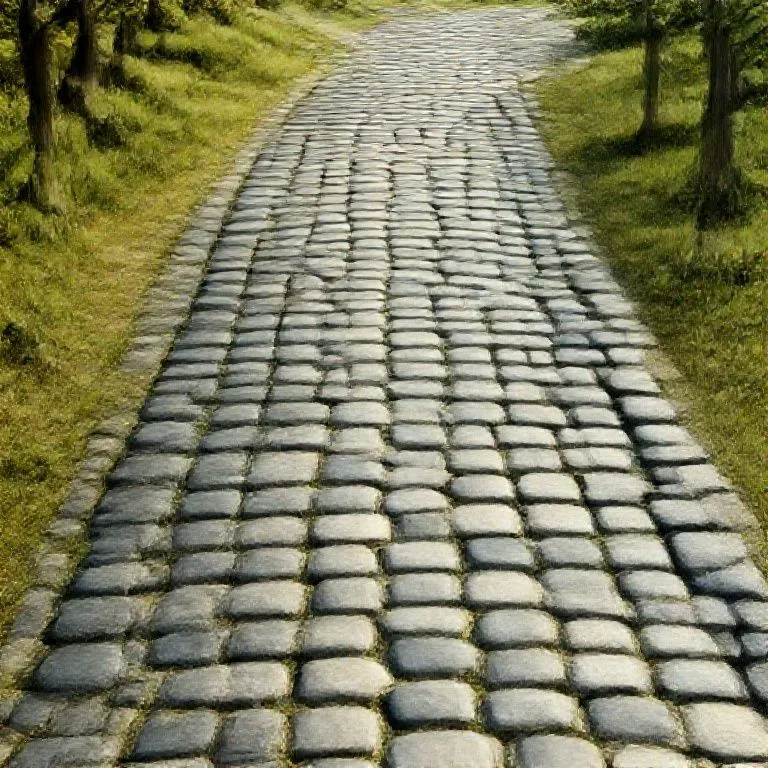
Cobblestone Path
Brief description
A durable road surface made of rounded river stones (cobbles) or roughly shaped stones embedded in sand or mortar. It provides a hard, all-weather surface for heavy traffic and drainage.
Use / Function
- Primary use: Transportation of people, animals, and carts on a durable surface that does not turn to mud.
- Secondary uses: Urban paving, preventing soil erosion, defining city streets.
- Scale: From garden paths to city streets and highways.
Operating principle
- Interlocking: The stones are placed close together so they support each other.
- Friction: The texture provides grip for hooves and wheels.
- Drainage: Gaps between stones (often filled with sand) allow water to drain, or the camber sheds water to the sides.
- Load Transfer: The stones transfer heavy point loads from wheels to the softer base below without sinking.
How to create it
- Preparation: Excavate the soil to a stable depth (remove topsoil).
- Base: Lay a bed of crushed stone or gravel for drainage and stability. Compact it well with a rammer.
- Bedding: Spread a layer of coarse sand or grit (about 5-10 cm).
- Selection: Select stones of similar size (cobbles) or shape (setts).
- Laying: Place stones upright (standing on end) into the sand bed, packing them tightly together. Use a hammer to tap them into place.
- Ramming: Use a heavy rammer to pound the stones down into the bedding until they are level.
- Grouting: Sweep fine sand or gravel into the joints between stones. Water it in to settle it. Repeat until joints are full.
Materials needed
- Essential:
- Tools:
Variants and improvements
- Dry Stone Paving: Stones set in sand/earth (permeable).
- Mortared Paving: Stones set in lime or cement mortar (impermeable, stronger).
- Belgian Block: Using rectangular dressed stones (setts) for a smoother ride than rounded cobbles.
- Patterned Paving: Arranging stones in fans or arcs (bogan) for strength and aesthetics.
Limits and risks
- Noise/Vibration: Can be very noisy and rough for wheeled vehicles compared to asphalt.
- Slippery when wet: Smooth river stones can be slippery for horses or pedestrians.
- Maintenance: Weeds can grow in sand joints; stones can loosen if the base washes away.
- Labor: Extremely labor-intensive to lay stone by stone.