Generated with AI3 min read
Refractometer
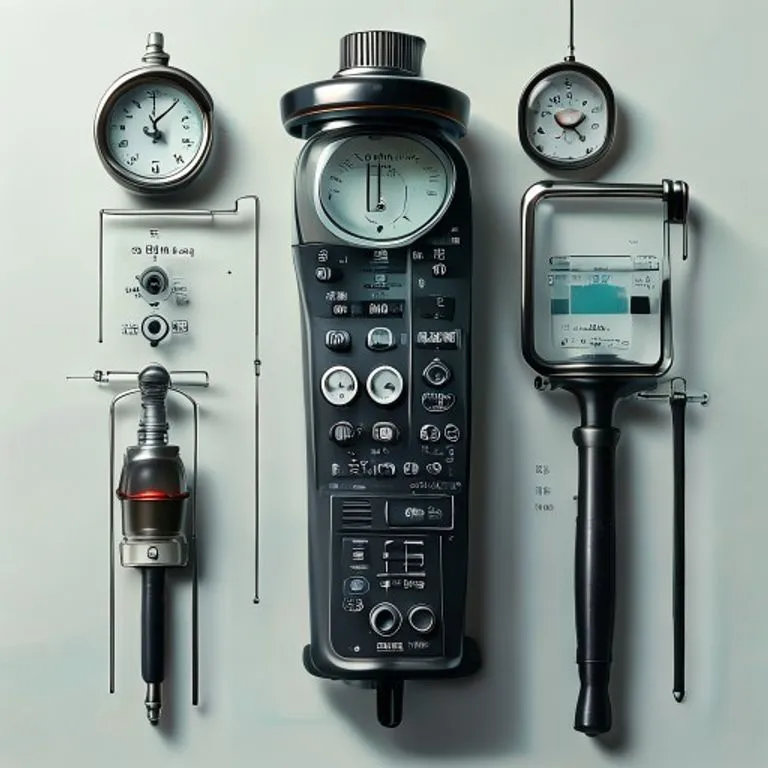
Brief description
A refractometer is a laboratory or field device used for the measurement of an index of refraction (refractometry). The index of refraction is calculated from the observed refraction angle using Snell’s law. For liquids, this index is used to determine the concentration of substances dissolved in them.
Use / Function
- Food Industry: Measuring the sugar content (Brix) in fruits, juices, wine, and honey.
- Medicine: Measuring the total plasma protein in a blood sample and urine specific gravity.
- Gemology: Identifying gemstones by measuring their refractive index.
- Industrial: Measuring the concentration of coolants and lubricants in machining processes.
Operating principle
It works based on the principle of critical angle and total internal reflection:
- Light Source: Light enters the sample from a light source (natural or lamp).
- Refraction: The light passes through a thin layer of the liquid sample and enters a measuring prism.
- Critical Angle: If the light hits the interface between the sample and the prism at an angle greater than the critical angle, it is totally reflected.
- Observation: The boundary between the light and dark areas (the shadow line) is observed through an eyepiece. Its position on a scale corresponds to the refractive index or concentration.
How to create it
- Measuring Prism: Obtain a high-refractive-index glass prism (like flint glass). The surface must be perfectly flat and polished.
- Eyepiece and Scale: Mount a lens system (eyepiece) focused on a graduated scale.
- Sample Cover: Add a hinged transparent cover (press plate) to hold a thin, uniform film of liquid against the prism.
- Housing: Mount everything in a light-tight metal or plastic tube.
- Calibration: Calibrate the device using distilled water (which should read 0 on a Brix scale or 1.3330 refractive index).
Technical Level: Advanced. Requires high-precision optics and precise scale calibration.
Materials needed
- Prism: High-quality Glass (high refractive index).
- Lenses: Lens for the eyepiece.
- Body: Brass or aluminum tube.
- Scale: Precisely engraved or printed glass or plastic scale.
Variants and improvements
- Abbe Refractometer: The primary benchtop instrument for high-precision measurements.
- Handheld Refractometer: Portable, used in agriculture and industry (described above).
- Digital Refractometer: Uses an optical sensor and digital display for easier reading.
Limits and risks
- Temperature Dependency: The refractive index changes with temperature. Quality refractometers have “Automatic Temperature Compensation” (ATC).
- Sample Clarity: Suspended solids can blur the shadow line.
- Prism Damage: The prism surface is sensitive and can be scratched by abrasive samples or improper cleaning.