Generated with AI4 min read
Kaplan Turbine
Brief description
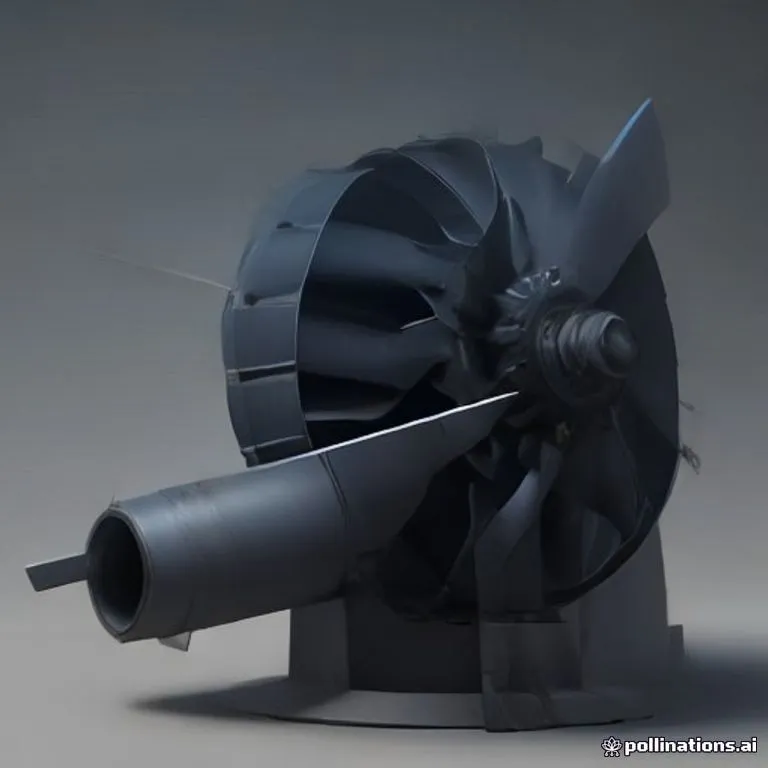
A Kaplan turbine is a propeller-type reaction water turbine with adjustable blades, specifically engineered for generating power under low hydraulic heads (low water drop height, typically 2 to 70 meters) and high volumetric flow rates. Unlike fixed-blade propeller turbines, the Kaplan turbine allows both its runner blades and guide vanes to adjust automatically according to changing water flow, maintaining high efficiency across a wide range of operating conditions.
Use / Function
- Primary use: Generating continuous, large-scale hydroelectricity from low-head river systems, tidal barrages, and run-of-the-river dams.
- Secondary uses: Regulating water release rates in irrigation canals while harvesting mechanical energy, and powering large-scale water transfer pumps in reverse configuration.
- Scale: Medium-to-large industrial installations (from hundreds of kilowatts in small canal installations to hundreds of megawatts in major river dams).
Operating principle
Axial Flow and Adjustable Hydrodynamics:
- Water Entry: Pressurized water enters radially through a spiral scroll case and passes through adjustable guide vanes (wicket gates) arranged in a circle.
- Radial-to-Axial Flow Transition: The guide vanes swirl the water and direct it axially along the turbine shaft toward the propeller runner.
- Lift Generation: As water flows axially past the propeller blades, the hydrofoil shape of the blades produces aerodynamic-like lift, causing the runner to spin rapidly.
- Variable Pitch Adjustment: Internal pitch mechanisms dynamically rotate the individual runner blades to match the angle of incoming water, maintaining peak aerodynamic efficiency even when water flow rates fluctuate.
- Draft Tube Recovery: Water exits axially through a widening draft tube below the tailrace, recovering remaining kinetic energy as static pressure to maximize total hydraulic head.
How to create it
1. Runner Hub and Adjustable Blade Assembly
- Machine a hollow central runner hub out of cast Steel or Bronze to house the blade pitch control linkages.
- Cast hydrofoil propeller blades (typically 3 to 6 blades) from corrosion-resistant steel or bronze.
- Mount the blades onto the hub using pivot trunnions and internal lever linkages connected to a central control rod extending through the hollow shaft.
2. Guide Vanes and Housing Assembly
- Construct a cylindrical outer housing with an expanding lower conical section (Steel or Cast Iron).
- Install a circular ring of pivoting guide vanes (wicket gates) above the runner, linked to an external control ring.
3. Shaft and Governor System
- Connect the runner hub to a vertical Steel shaft supported by thrust and guide bearings.
- Link the blade control rod and wicket gate ring to a hydraulic governor mechanism or mechanical linkages for synchronized pitch control.
Materials needed
- Runner Blades & Hub: High-strength Steel or corrosion-resistant Bronze.
- Outer Casing & Draft Tube: Cast Iron, structural steel plate, or reinforced concrete.
- Shaft & Linkages: Heavy-duty forged carbon steel.
- Working Fluid: Low-head Water supplied from a river or low-dam reservoir.
Variants and improvements
- Bulb Turbine: A horizontal inline variant where the generator and turbine are sealed inside a streamlined “bulb” submerged directly in the water flow, reducing civil engineering costs for low-head sites.
- Tube Turbine: An inclined or horizontal inline Kaplan turbine where the generator is mounted externally outside the water duct, simplified for smaller river projects.
- VLH (Very Low Head) Turbine: A slow-rotating, large-diameter Kaplan variant operating efficiently on water drops under 3 meters with minimal impact on aquatic life.
Limits and risks
- Cavitation Risk: Low pressure on the suction side of the propeller blades can cause destructive cavitation bubbles, requiring precise depth submergence below the tailrace.
- Mechanical Complexity: The internal hub mechanism required to adjust moving blades under immense water pressure increases maintenance demands and risk of oil leaks.
- Fish Mortality: High-speed blade rotation can harm migratory fish unless fish screens or eco-friendly low-blade-count designs are utilized.