Generated with AI3 min read
Diesel Engine
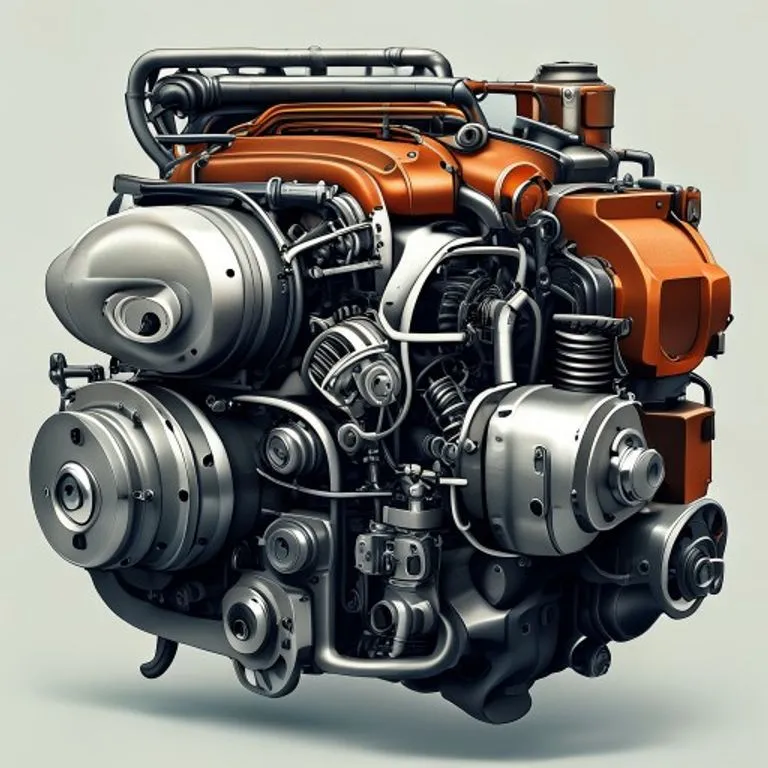
Brief description
A diesel engine is an internal combustion engine where the ignition of fuel is caused by the elevated temperature of the air in the cylinder due to mechanical compression (compression ignition). Unlike gasoline engines, it does not use spark plugs.
Use / Function
- Heavy Transport: Powering trucks, buses, trains, and large ships.
- Construction and Agriculture: The standard engine for tractors, excavators, and heavy machinery.
- Power Generation: Used in stationary generators for backup power and remote areas.
- Scale: From medium-sized engines for cars to the largest engines in the world for container ships.
Operating principle
The diesel cycle follows four strokes but differs in the ignition phase:
- Intake: Only air is drawn into the cylinder.
- Compression: The air is compressed to a very high ratio (typically 14:1 to 25:1), causing its temperature to rise significantly (up to 700°C-900°C).
- Power: Fuel is injected into the hot compressed air. It ignites spontaneously. The expanding gases force the Piston down.
- Exhaust: Waste gases are pushed out of the cylinder.
How to create it
Building a diesel engine requires even higher precision and strength than a gasoline engine due to the extreme pressures involved:
- Heavy Duty Block: Usually cast Iron, reinforced to handle high compression.
- Fuel Injection System: A high-pressure pump and precise injectors are essential. This is the most technically challenging part.
- Robust Pistons: Often made of heavy-duty Aluminum alloys with steel reinforcements.
- Technical level: Very Advanced.
Materials needed
- Essential materials:
- Tools:
- Lathe and Milling Machine: For high-precision machining.
- Furnace: For casting the engine block.
Variants and improvements
- Indirect Injection: Fuel is injected into a pre-chamber (older, smoother).
- Direct Injection: Fuel is injected directly into the main combustion chamber (modern, more efficient).
- Turbo-Diesel: Uses a turbocharger to increase power and efficiency.
- Biodiesel: Capable of running on processed vegetable oils or animal fats with minimal modifications.
Limits and risks
- Weight: Diesel engines are heavier than gasoline engines of similar power.
- Cost: More expensive to manufacture due to the precision of the fuel system.
- Starting in Cold: High compression requires a powerful battery/starter, and cold air may need “glow plugs” to reach ignition temperature.
- Emissions: Produces high levels of nitrogen oxides (NOx) and soot (particulate matter).
Related Inventions
- Internal Combustion Engine: The broader category of engines.
- Piston: The core moving component.