Generated with AI3 min read
Furnace
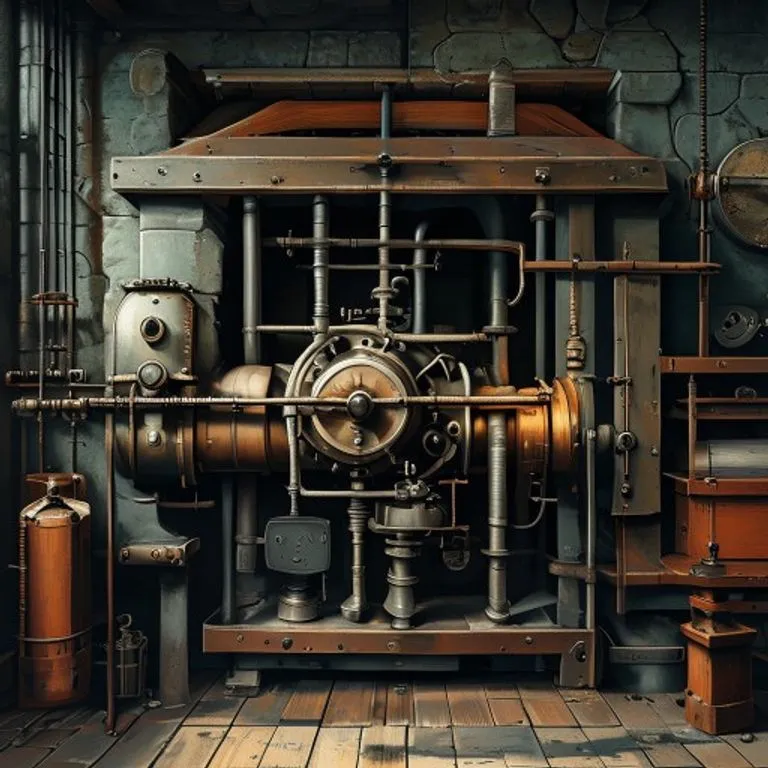
Brief description
A furnace is a device used for high-temperature heating. Unlike a Kiln which bakes or dries materials (like ceramics), a furnace is typically used to melt metals (smelting), melt glass, or burn fuel to generate heat for other processes.
Use / Function
- Smelting: Extracting metal from ore (e.g., iron, copper).
- Melting: Liquefying metals for casting (foundry furnace).
- Glassmaking: Melting sand and other ingredients into glass.
- Heating: Providing heat for a building or steam engine.
Operating principle
Furnaces operate by containing an extremely hot fire within a refractory (heat-resistant) chamber.
- Fuel: Uses high-energy fuels like Charcoal, coal, or coke.
- Air Blast: Most high-temperature furnaces (like Blast Furnaces) use Bellows to pump in air (oxygen), increasing the combustion rate and temperature significantly beyond what a natural draft can achieve.
How to create it
- Refractory Lining: Build a vertical shaft or chamber using heat-resistant materials (fireclay, sandstone, firebrick). Ordinary stone may explode or crumble.
- Air Intake (Tuyere): Install a pipe or nozzle at the bottom to inject air from bellows.
- Charging: Load fuel and ore in alternating layers from the top (for shaft furnaces).
- Tapping: Create a hole at the bottom to tap out the molten metal and slag.
Materials needed
- Structure: Clay mixed with sand/grog, or Firebrick.
- Fuel: Charcoal is the historical standard; Coke for modern blast furnaces.
- Flux: Limestone (to remove impurities/slag).
Variants and improvements
- Bloomery: Primitive iron furnace that produces a solid sponge of iron (bloom), not liquid.
- Blast Furnace: Tall shaft furnace with forced air that melts iron completely (cast iron).
- Cupola Furnace: Used to remelt cast iron.
- Reverberatory Furnace: Fuel and material are separated; heat reflects off the roof onto the material.
Limits and risks
- Temperature: Reaching the melting point of iron (1538°C) is very difficult without efficient bellows and fuel.
- Explosions: Molten metal contacting water causes steam explosions.
- Carbon Monoxide: Incomplete combustion produces deadly gas.
Related inventions
- Kiln: The lower-temperature cousin.
- Bellows: Essential for high temperatures.
- Forge: Open hearth for heating metal for working (not melting).
- Anvil: Used to work the metal after heating.
Related materials
- Iron: Primary product.
- Glass: Another product.
- Charcoal: Fuel.
- Mineral Wool: Made in a cupola furnace.
- Perlite: Expanded in a furnace.
- Vermiculite: Exfoliated in a furnace.