NaturalGenerated with AI2 min read
Crude Oil
Mixture of hydrocarbons
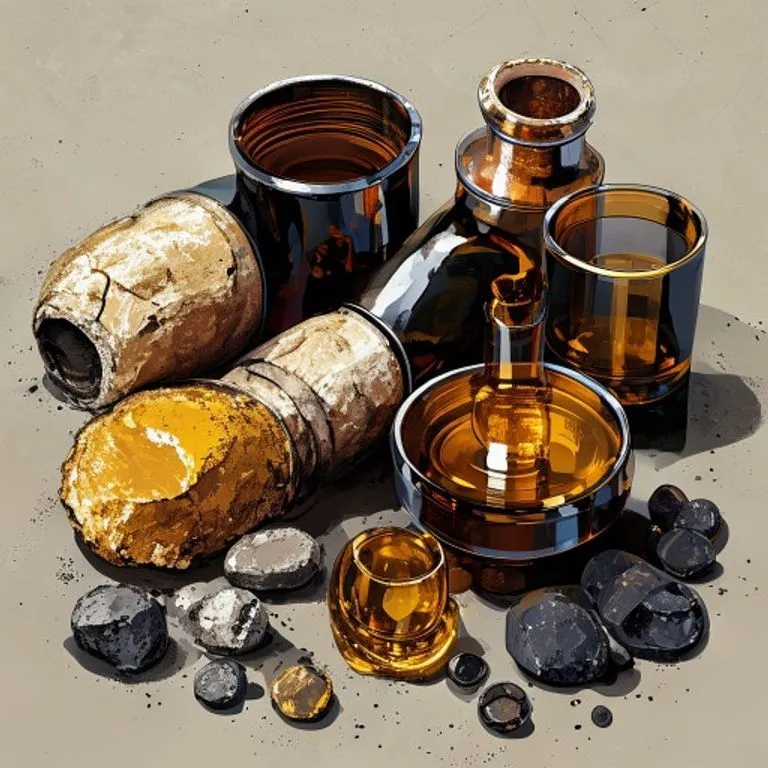
Crude oil is a naturally occurring liquid mixture of hydrocarbons formed from ancient biological material under heat and pressure.
Description of what it is like
It ranges from light and flowable to thick and tar-like, often dark brown or black. It has a strong odor, repels water, and burns readily when ignited.
Origin and where to find it
- Natural seeps: Oil leaks from the ground or seabed in some regions.
- Sedimentary basins: Trapped in porous rock layers under impermeable caps.
- Associated gas: Often found with natural gas that must be vented or captured.
Minimum processing required
- Settling: Let water and sediment separate in containers.
- Filtration: Strain with cloth or sand to reduce grit.
- Warming: Gently heat to lower viscosity for handling.
Tools needed to work on it
- Containers: Heat-safe pots or barrels for settling and storage.
- Screens or cloth: For coarse filtration.
- Pumps: To move thick oil when gravity flow is insufficient.
Common forms of use
- Raw feedstock: Distilled into lighter and heavier fractions.
- Heavy residue: Used for waterproofing or binding aggregates.
- Blends: Mixed with sand and gravel for paving materials.
Possible substitutes
- Animal Fat: Basic fuel and lubricant substitute, but solid at room temperature.
- Vegetable Oil: Renewable substitute for lamps and light lubrication.
- Resin: For waterproofing and adhesive uses.
Limitations and common failures
- Variability: Composition varies by source, affecting yield and quality.
- Contamination: Water and sediment reduce usefulness and increase smoke.
- Cold flow: Heavy crude becomes too viscous in cold climates.
Risks and safety
- Fire hazard: Vapors can ignite; keep away from open flames during handling.
- Toxic fumes: Heating produces harmful vapors; work outdoors or vent well.
- Environmental damage: Spills persist and spread quickly.
Related materials
Properties
- Flammable
- Viscous
- Hydrophobic
- Variable composition
Used for
- Fuel source after refining
- Feedstock for bitumen and asphalt
- Lubricant base after processing
- Waterproofing in heavy fractions
Manufacturing / Process
Collected from natural seeps or wells, then separated from water and gas by settling and basic filtration.