Bicycle
Brief description
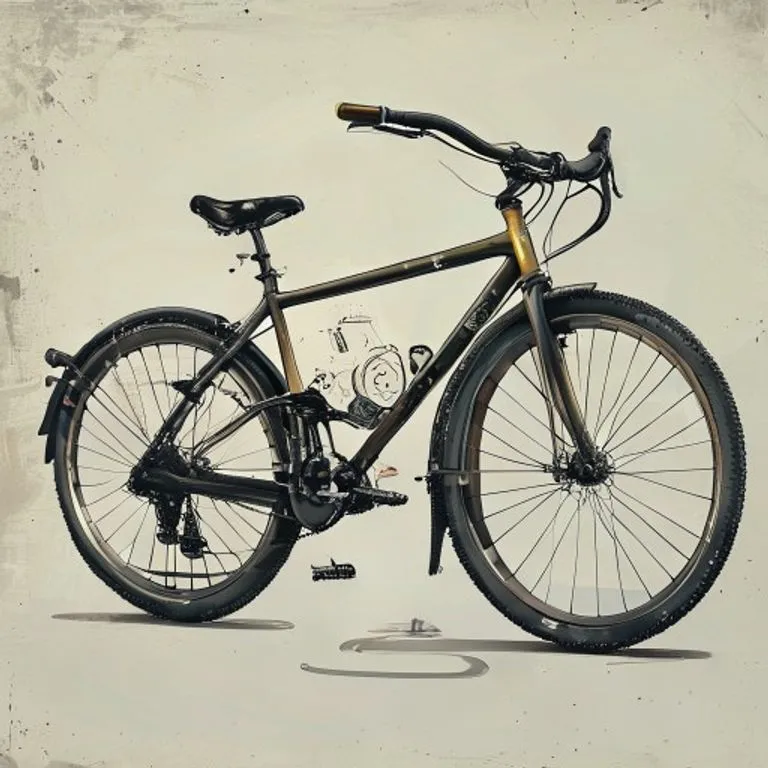
A human-powered, pedal-driven vehicle with two wheels attached to a frame, one behind the other. It is one of the most efficient forms of transport, converting muscle power into motion with minimal loss.
Use / Function
- Transportation: Efficient personal travel over short to medium distances.
- Cargo: Can be adapted with racks or trailers to carry significant loads.
- Health: Provides a low-impact form of aerobic exercise.
- Scale: Personal transport.
Operating principle
The bicycle operates on several key principles:
- Drivetrain: The rider’s legs push pedals in a circular motion. This turns a chainring, which pulls a Chain connected to a rear sprocket, rotating the rear wheel.
- Gearing: By varying the size of the chainrings and sprockets, the mechanical advantage can be adjusted for climbing hills or high speed.
- Stability: While moving, a combination of steering geometry (trail) and gyroscopic effects helps the bicycle remain upright.
- Efficiency: Pneumatic tires and ball bearings reduce rolling resistance and friction to a minimum.
How to create it
1. The Frame
Construct a lightweight but strong frame, typically a “diamond” shape using Steel or Aluminum tubing.
2. The Wheels
Construct wheels using rims connected to a central hub via tensioned wire spokes (the Spoke Lacing is critical). Install Ball and Roller Bearings in the hubs.
3. The Drivetrain
Install a crankset with pedals, a Chain, and a rear sprocket. A freewheel mechanism allows the wheel to spin without the pedals moving.
4. Steering and Braking
Add a fork to hold the front wheel, connected to handlebars via a headset. Install brakes that apply friction to the rims or a hub-mounted disc.
Materials needed
- Steel or Aluminum: For the frame and components.
- Natural Rubber: For Pneumatic Tires and inner tubes.
- Leather or Plastic: For the saddle.
- Steel Cable: For brake and gear actuation.
- Ball and Roller Bearings: For all rotating parts.
Variants and improvements
- Safety Bicycle: The standard modern design with two equal-sized wheels (replaced the dangerous Penny-farthing).
- Mountain Bike: Built for off-road use with wider tires and suspension.
- Cargo Bike: Specialized for carrying heavy loads or children.
- Electric Bike: Adds an Electric Motor and battery to assist the rider.
Limits and risks
- Stability: Requires balance and motion to stay upright; difficult to use at very low speeds.
- Exposure: Provides no protection from weather or collisions with larger vehicles.
- Terrain: Efficiency drops significantly on soft sand, deep mud, or extremely steep inclines.