Generated with AI3 min read
Chain
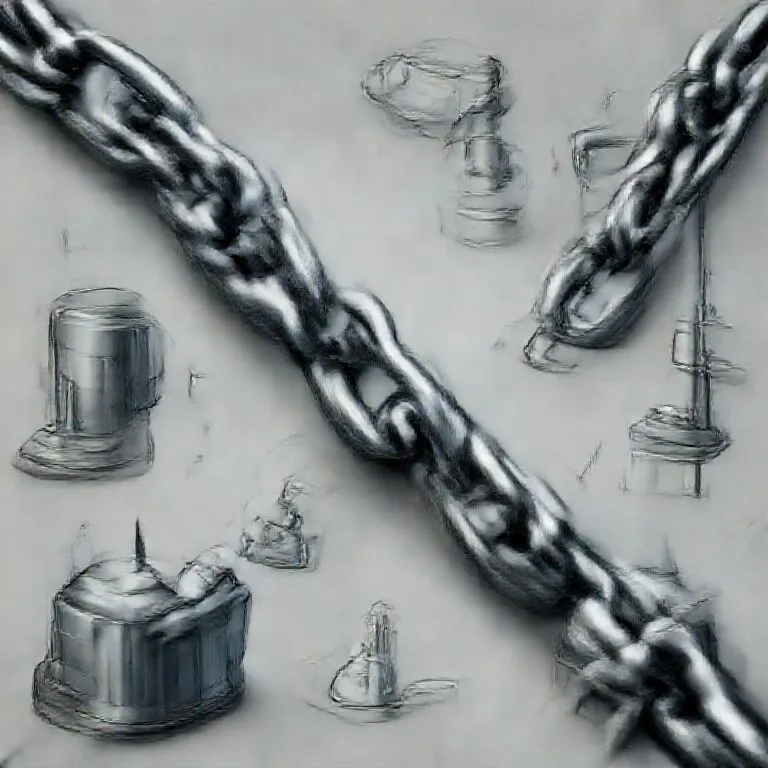
A chain is a series of connected links which are typically made of metal. A chain has two styles: those designed for lifting/pulling (link chain) and those designed for transferring power in machines (roller chain).
Use / Function
Chains are fundamental for heavy-duty applications where rope might fail or stretch too much.
- Mooring & Anchoring: Provides weight and durability against seabed abrasion.
- Lifting: Hoisting heavy loads (cranes, pulleys).
- Power Transmission: Bicycles, motorcycles, and machinery (roller chains).
- Security: Locking gates, prisoners, or valuable items.
Operating principle
Flexibility + Strength: Each link is a rigid ring, but because they are interlocked, the whole assembly is flexible. This allows it to wrap around capstans, windlasses, or sprockets. Unlike rope, metal chain does not stretch significantly under load, and it is resistant to cutting and abrasion.
How to create it
Blacksmithing Method (Wrought Iron)
- Preparation: Cut an iron rod into equal lengths.
- Bending: Heat a rod segment and bend it into a U-shape, then overlap the ends (scarfing).
- Threading: Before closing the loop, thread it through the previous link.
- Welding: Heat the overlapping ends to white-hot and hammer them together (forge weld) to seal the ring.
- Repeat: Continue the process for the desired length.
Industrial Method (Steel)
- Machines cut wire, bend it, and use electric resistance welding or flash butt welding to join the ends instantly.
Materials needed
- Iron: Traditional material. Wrought iron is excellent because it resists corrosion better than mild steel and is easy to forge weld.
- Steel: Modern high-strength chains.
- Fuel: Coal/Charcoal for the forge.
Variants and improvements
- Stud-link Chain: A bar (stud) is placed across the middle of each link. This prevents the chain from kinking/tangling and increases its strength by preventing the sides of the link from collapsing inward under heavy load. Standard for large ship anchors.
- Roller Chain: Designed to engage with sprockets to transmit torque.
- Proof Coil: Standard commercial chain for general purpose.
Limits and risks
- Weight: Chain is very heavy compared to rope, making it hard to carry or manipulate manually.
- Corrosion: Iron and steel will rust. Regular painting, galvanizing, or oiling is needed.
- Failure Mode: Chains often fail “catastrophically” (snap suddenly) if overloaded or if a weld is weak, whereas rope might fray first.
- Noise: Handling chain is loud.