SyntheticGenerated with AI3 min read
Reinforced Concrete
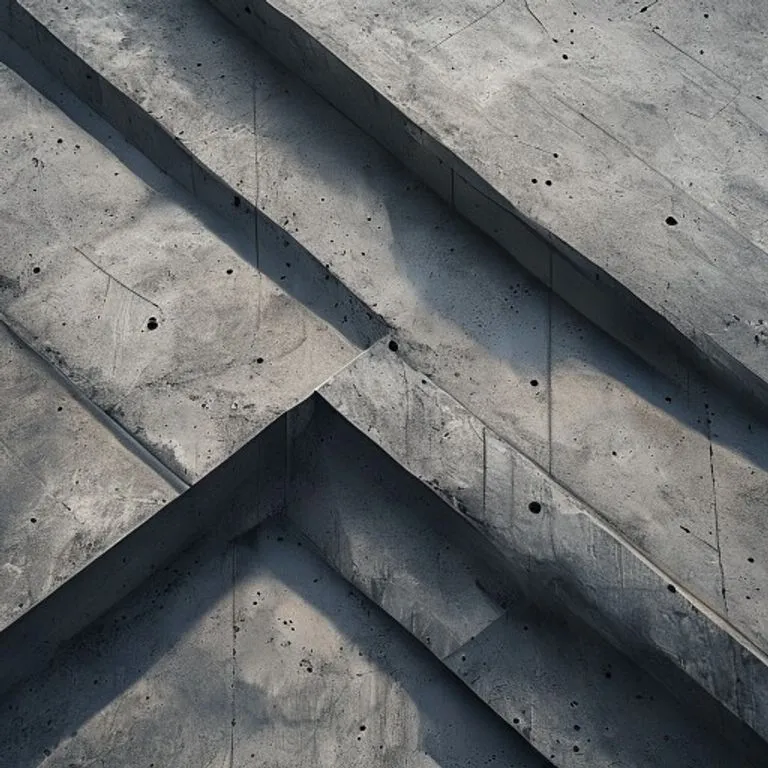
A composite material in which Concrete’s relatively low tensile strength and ductility are counteracted by the inclusion of reinforcement having higher tensile strength or ductility, usually Steel Rebar.
Description of what it is like
It appears as a standard grey concrete surface, but inside it contains a skeleton of steel bars or mesh. This combination allows it to span large distances and resist forces that would crack plain concrete, such as bending or stretching. It is the backbone of modern infrastructure.
Origin and where to find it
- Artificial: It is a strictly manufactured material.
- History: Developed in the mid-19th century. Joseph Monier first used it for garden pots in 1867, and François Hennebique later developed a complete construction system.
- Where to find: In almost every modern large structure: building frames, highway overpasses, tunnels, and retaining walls.
Minimum processing required
- Formwork: Build molds (usually wood or steel) to define the shape of the structure.
- Reinforcement: Cut, bend, and tie Steel bars (Rebar) into a cage or mesh. Place it inside the forms, ensuring proper spacing from the edges (cover).
- Mixing: Prepare Concrete (cement, sand, aggregate, water).
- Pouring: Pour the wet concrete into the forms, surrounding the steel completely.
- Consolidation: Vibrate the mix to remove air pockets and ensure it bonds with the steel.
- Curing: Keep moist to reach full strength.
Tools needed to work on it
- Steel Tools: Bolt cutters or grinders to cut Rebar; pliers to tie wire.
- Carpentry Tools: Saws and hammers to build formwork.
- Concrete Tools: Shovel, Mixer, vibrators, and trowels.
Common forms of use
- Slabs: Floors and ceilings in buildings.
- Beams and Columns: The structural frame of skyscrapers.
- Precast: Made in a factory and transported (e.g., pipes, wall panels).
- Prestressed: Steel is stretched before/after pouring to actively compress the concrete, allowing for longer spans (bridges).
Possible substitutes
- Structural Steel: Lighter and faster to erect, but requires fireproofing and is more expensive.
- Timber: For smaller or residential structures; sustainable but less durable against fire and rot.
- Stone / Brick: Great for compression (arches, walls) but cannot withstand tension (cannot form flat roofs/beams easily).
Limitations and common failures
- Corrosion (Concrete Cancer): If water reaches the steel (due to cracks or insufficient concrete cover), the steel rusts, expands, and cracks the concrete (spalling).
- Weight: Extremely heavy, requiring massive foundations.
- Carbon Footprint: Cement production releases significant CO2.
- Complexity: Requires engineering calculations to place steel correctly where tension occurs.
Risks and safety
- Collapse: Improper placement of Rebar can lead to catastrophic structural failure.
- Impacement: Exposed vertical Rebar is a major hazard on construction sites (requires caps).
- Silica Dust: Cutting cured concrete releases dangerous dust.
Related materials
Properties
- High Compressive Strength
- High Tensile Strength
- Durable
- Fire Resistant
- Moldable
Used for
- Skyscrapers
- Bridges
- Dams
- Bunkers
- Foundations
Manufacturing / Process
Casting concrete around steel reinforcement bars (**[Rebar](/en/materials/rebar)**).