SyntheticGenerated with AI2 min read
Rebar
Made of
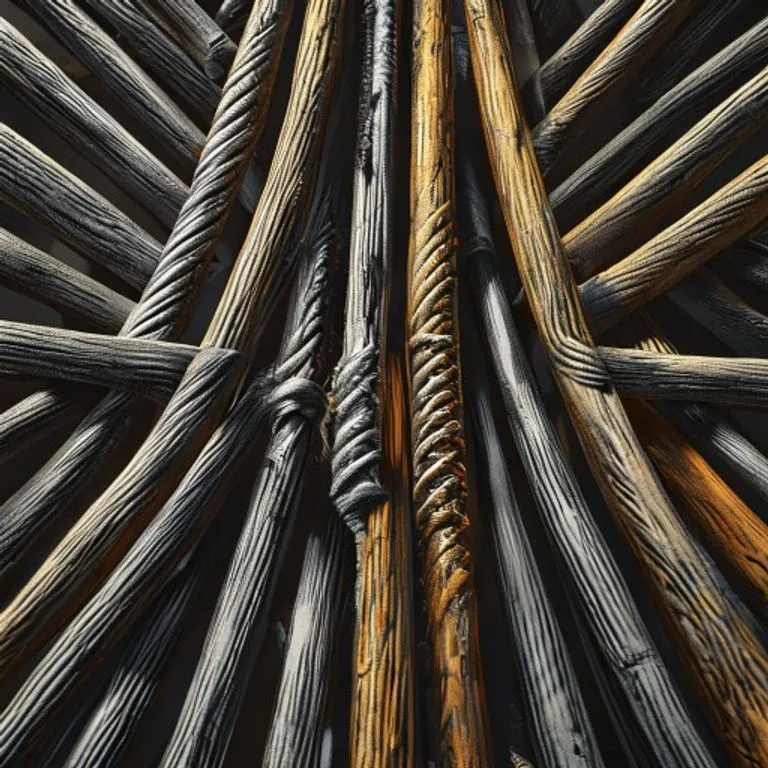
Short for reinforcing bar. A steel bar or mesh of steel wires used as a tension device in Reinforced Concrete and reinforced masonry structures to strengthen and aid the concrete under tension.
Description of what it is like
It is a long, cylindrical rod of steel, usually with a patterned surface (ridges or ribs) to help it bond better with concrete. It is heavy, strong, and can be bent into specific shapes.
Origin and where to find it
- Artificial: Manufactured in steel mills.
- Scrap: Can often be found in demolished concrete structures (needs cleaning).
Minimum processing required
- Cutting: To length using bolt cutters, saws, or torches.
- Bending: To form corners, hooks, or stirrups.
- Tying: Wired together to form a cage before concrete is poured.
- Cleaning: Must be free of loose rust, oil, or mud to bond with concrete.
Tools needed to work on it
- Bolt Cutters: For thinner bars.
- Angle Grinder / Saw: For thicker bars.
- Rebar Bender: Manual or hydraulic tool to bend bars precisely.
- Pliers: To twist wire ties.
Common forms of use
- Straight Bars: For beams and columns.
- Mesh: Welded wire fabric for slabs and walls.
- Stirrups: Rectangular loops to hold main bars in place.
Possible substitutes
- Bamboo: Can be used in low-load, temporary structures (rots over time).
- Fiberglass Rebar: Non-corrosive, but brittle and cannot be bent on site.
- Wire Mesh: For light loads like sidewalks.
- Scrap Iron: Old pipes or bed frames (unreliable strength).
Limitations and common failures
- Corrosion: Rusts quickly if exposed to moisture; expanding rust cracks concrete.
- Bond Failure: Smooth bars (no ridges) can slip out of concrete.
Risks and safety
- Impacement: Exposed vertical bars are dangerous if someone falls on them (use caps).
- Cuts: Sharp ends and burrs.
- Back Injury: Heavy to lift and carry.
Related materials
- Steel: The raw material.
- Reinforced Concrete: The composite material it creates.
- Wire: Used to tie it.
- Concrete: The material it reinforces.
Properties
- High Tensile Strength
- Ribbed Surface
- Ductile
- Weldable
Used for
- Reinforced Concrete
- Reinforced Masonry
- Ground Anchors
- Mesh Reinforcement
Manufacturing / Process
Hot rolling steel billets, often creating ridges for better bonding.