Generated with AI2 min read
Oil Refinery
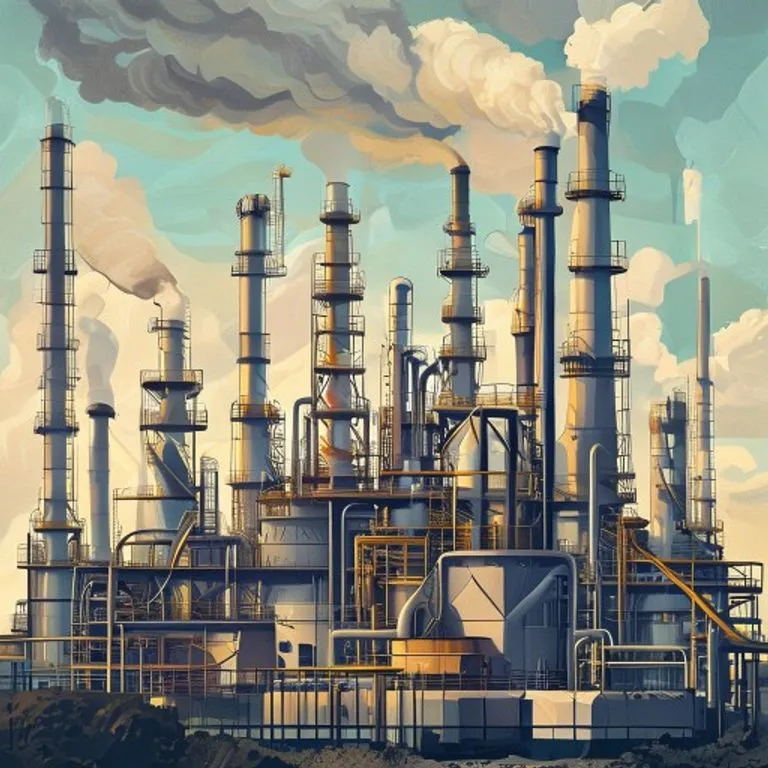
Brief description
An oil refinery is a coordinated set of vessels, pipes, and heat systems that separates crude oil into useful fractions at scale. It enables consistent fuels, lubricants, and heavy binders from the same feedstock.
Use / Function
- Fuel production: Produce consistent lamp oils and later fuels.
- Lubricants: Separate mid fractions for machinery.
- Construction binders: Concentrate heavy fractions for Bitumen and Asphalt.
- Process safety: Centralize heat, venting, and cooling.
- Scale: Local industrial to regional.
Operating principle
Refineries are built around controlled heating, vapor routing, and staged condensation.
- Preheating: Crude warms to reduce viscosity and remove water.
- Distillation: Heat separates fractions by boiling range using Distillation.
- Condensation: Vapors cool in Pipes or coils.
- Collection: Each fraction is stored in Containers.
- Residue handling: Heavy ends are moved with an Oil Pump.
How to create it
Minimum functional version
- Still area: Build a heat-safe still with a sloped condenser.
- Cooling line: Run a coil through a water bath for steady condensation.
- Storage: Provide separate sealed containers for each fraction.
- Ventilation: Add Passive Ventilation near heat zones.
- Transfer: Use a pump to move heavy residue without overheating.
Required technological level
Intermediate to advanced. Requires reliable metalwork, sealing, and heat control.
Materials needed
- Essential: Steel or Iron vessels, Brick or Concrete foundations, Copper coils or Glass condensers, Water for cooling.
- Tools: Cutting tools, hammers, sealants, and temperature control tools.
- Possible substitutes: Clay stills for small batches, air-cooled condensers where water is scarce.
Variants and improvements
- Batch refinery: Single still with manual cuts between fractions.
- Fractional column: Taller column for better separation.
- Vacuum distillation: Lower pressure to reduce cracking of heavy oils.
- Heat recovery: Reuse hot output to preheat incoming crude.
Limits and risks
- Fire and explosions: Flammable vapors ignite easily.
- Toxic fumes: Venting and distance from living areas are essential.
- Pressure buildup: Blocked outlets can rupture vessels.
- Contamination: Water or sediment lowers yield and can cause violent boiling.