Welding
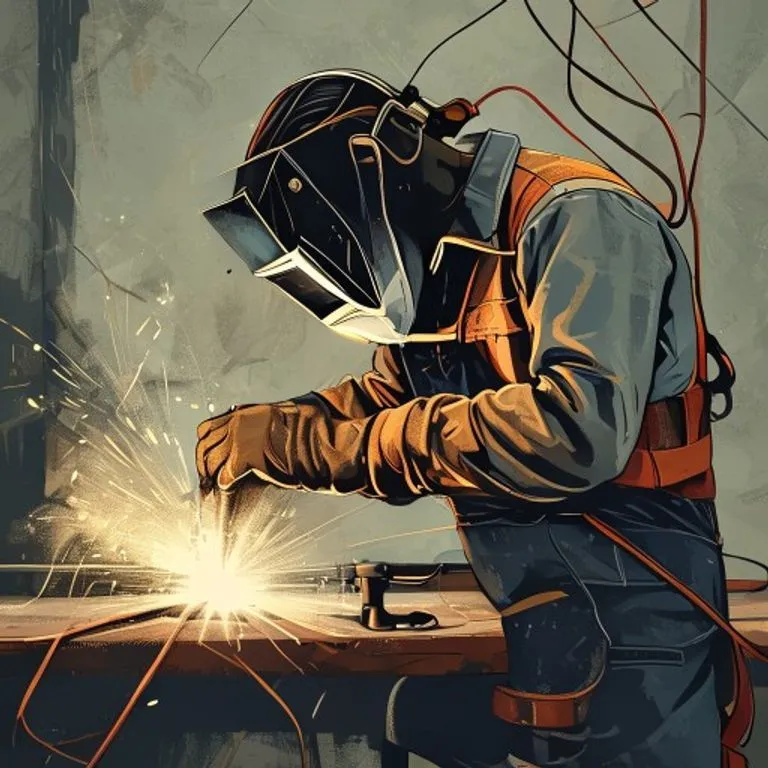
Welding
Welding is a fabrication process that joins materials, usually metals or thermoplastics, by using high heat to melt the parts together and allowing them to cool, causing fusion. Welding is distinct from lower temperature metal-joining techniques such as brazing and soldering, which do not melt the base metal.
The Process
In its most basic form (Forge Welding), two pieces of metal are heated to a high temperature and then hammered together. The heat softens the metal, and the hammering forces the atoms of the two pieces to bond. Modern welding uses electricity (arc welding) or gas flames to generate the heat.
Key Steps (Forge Welding):
- Preparation: Clean the surfaces to be joined. Remove rust and scale.
- Heating: Heat the metal in a Forge until it is bright yellow or white hot (near melting point).
- Fluxing: Apply Flux (like Sand or Borax) to the heated area to prevent oxidation and remove impurities.
- Joining: Quickly place the pieces together on an Anvil and strike them with a Hammer. The force expels impurities and fuses the metal.
Importance
Welding allows for the creation of complex metal structures, tools, and repairs that are stronger than those made with mechanical fasteners. It is essential for advanced construction, vehicle manufacturing, and tool making.
Types of Welding
- Forge Welding: The oldest method, using a forge and hammer.
- Arc Welding: Uses an Arc Welder to melt the metal. Requires a power source and Welding Electrodes.
- Gas Welding: Uses a fuel gas (like acetylene) and oxygen to produce a flame.
Safety
Always use Protective Equipment like gloves and a welding mask to protect against burns and UV radiation.