Generated with AI2 min read
Arc Welder
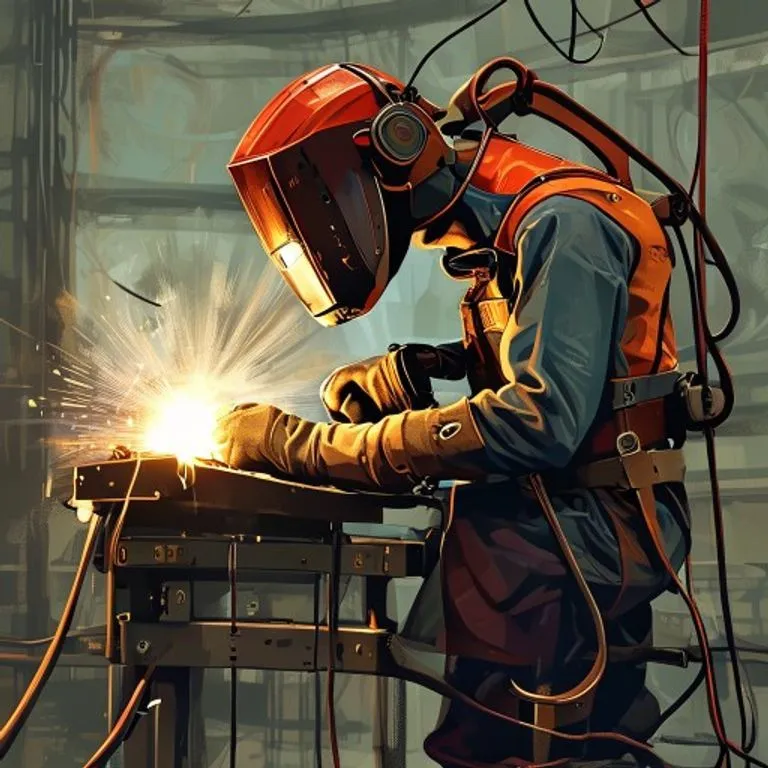
Arc Welder (Improvised)
A device that uses an electric arc to melt and join metals. In a survival situation, this can be improvised using car batteries connected in series.
Use / Function
- Joining Metals: Repairing tools, vehicles, or structures.
- Cutting: At high amperage, can cut through thin metal.
Operating Principle
An electric current jumps across a gap between the electrode and the workpiece, creating an intense arc of plasma (approx. 3500°C - 6000°C). This heat melts both the base metal and the electrode, fusing them together.
How to create it (Battery Welder)
- Power Source: Connect 2 or 3 12V lead-acid Batteries in series to get 24V or 36V DC. This provides the necessary voltage to strike and maintain an arc.
- Series connection: Battery 1 (+) to Battery 2 (-), Battery 2 (+) to Battery 3 (-).
- Cables: Use heavy-gauge Copper cables (like jumper cables) to handle the high current (50-100+ Amps).
- Electrode Holder: Clamp the positive cable to the Welding Electrode using insulated pliers or a makeshift holder.
- Ground Clamp: Clamp the negative cable securely to the metal workpiece.
- Welding: Scratch the electrode tip against the workpiece to start the arc, then maintain a short gap.
Materials needed
- Batteries: Lead-acid (car batteries) are best for high current.
- Cables: Thick copper wire to prevent melting.
- Electrode Holder: Pliers with insulated handles.
- Protection: Protective Equipment (Essential: Dark glass/mask to prevent blindness from UV, gloves).
Variants and improvements
- Stick Welder (Transformer): Uses a transformer to step down mains voltage (110/220V) to welding voltage (20-40V) while increasing current. Safer and more controllable than batteries.
- Resistor Bank: Adding a resistor (like a coil of steel wire) in series with the batteries can help control the current.
Limits and risks
- Blindness: The UV light (“Arc Eye”) can permanently damage eyes. NEVER look at the arc without proper shade 10-12 glass.
- Explosion: Batteries produce hydrogen. Keep them away from sparks (the arc).
- Electrocution: High current/voltage hazard.
- Duty Cycle: Batteries will drain quickly and may overheat.
- Quality: DC battery welding is actually very smooth, but lacks current control.