Generated with AI3 min read
Oil Refining
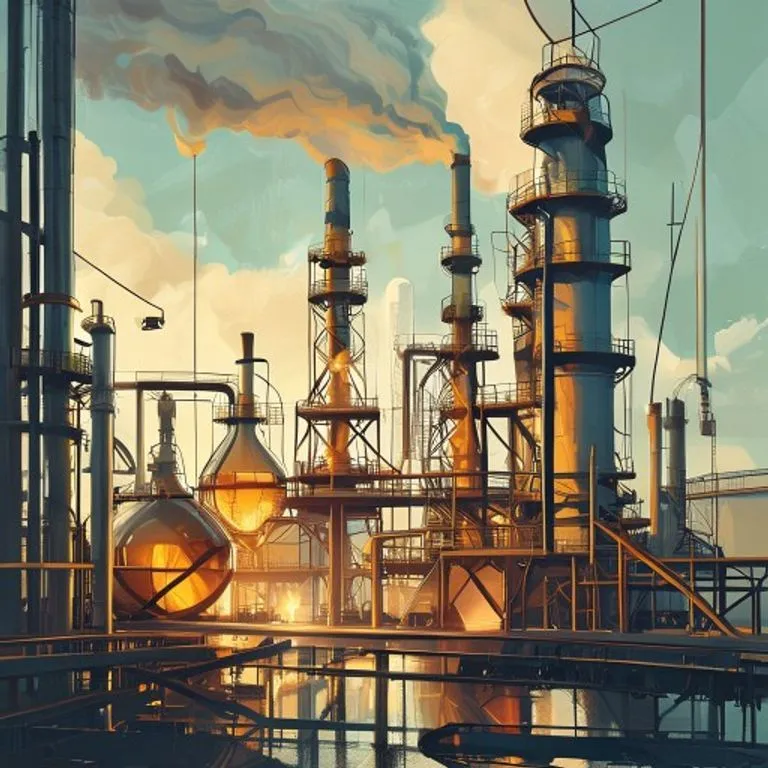
Brief description
Oil refining is the controlled separation of crude oil into useful fractions by heat and condensation. It produces fuels, lubricants, and heavy binders that enable lighting, transport, and construction.
Use / Function
- Fuel production: Obtain lighter fractions for lamps, burners, and engines.
- Lubricants: Produce medium fractions for machinery and tools.
- Construction binders: Use heavy residue for Bitumen and Asphalt.
- Resource efficiency: Separate mixed crude into targeted uses instead of burning it raw.
Operating principle
- Boiling range separation: Different hydrocarbons vaporize at different temperatures.
- Vapor transport: Hot vapors move into a cooler zone.
- Condensation: Vapors cool and re-liquefy into separate fractions.
- Collection: Each fraction is gathered in its own Containers.
How to create it
- Prepare crude: Let Crude Oil settle to remove water and grit.
- Heat slowly: Use a controlled Fire to avoid sudden boiling.
- Guide vapors: Route vapors through a sloped Pipes or a coiled tube.
- Cool and collect: Run the condenser through cool Water to collect lighter fractions first.
- Stop before residue burns: The heavy residue can be saved for waterproofing or paving binders.
Materials needed
- Essential: Crude Oil, heat source, sealed but vented vessel, condenser.
- Tools: Oil Refinery for organized processing, Alembic or Distillation setup, Containers, Pipes, Oil Pump for thick residue.
- Possible substitutes: Clay or metal vessels if glass is unavailable; air-cooled condenser if water is scarce.
Variants and improvements
- Simple batch distillation: One vessel, basic condenser, coarse separation.
- Fractional distillation: Taller column increases separation efficiency.
- Reflux control: Returning some condensate improves purity.
- Vacuum distillation: Lower pressure reduces needed temperatures (advanced).
Limits and risks
- Fire and explosion: Flammable vapors ignite easily; keep flames controlled and equipment vented.
- Toxic fumes: Work outdoors or with strong Passive Ventilation.
- Pressure buildup: Never seal the system without a safe vent.
- Contamination: Water or sediment creates violent boiling and poor separation.
Related materials
- Crude Oil: Feedstock for all fractions.
- Bitumen: Heavy residue used for waterproofing.
- Asphalt: Bitumen mixed with aggregate for paving.
- Water: Cooling and cleaning.
Related inventions
- Distillation: Core separation method.
- Oil Refinery: Structured plant for continuous refining.
- Alembic: Simple distillation apparatus.
- Controlled Fire: Heat source for boiling.
- Containers: Fraction storage.
- Pipes: Vapor routing and condensation.
- Oil Pump: Moving thick residues.
- Passive Ventilation: Fume control.