Generated with AI3 min read
Distillation
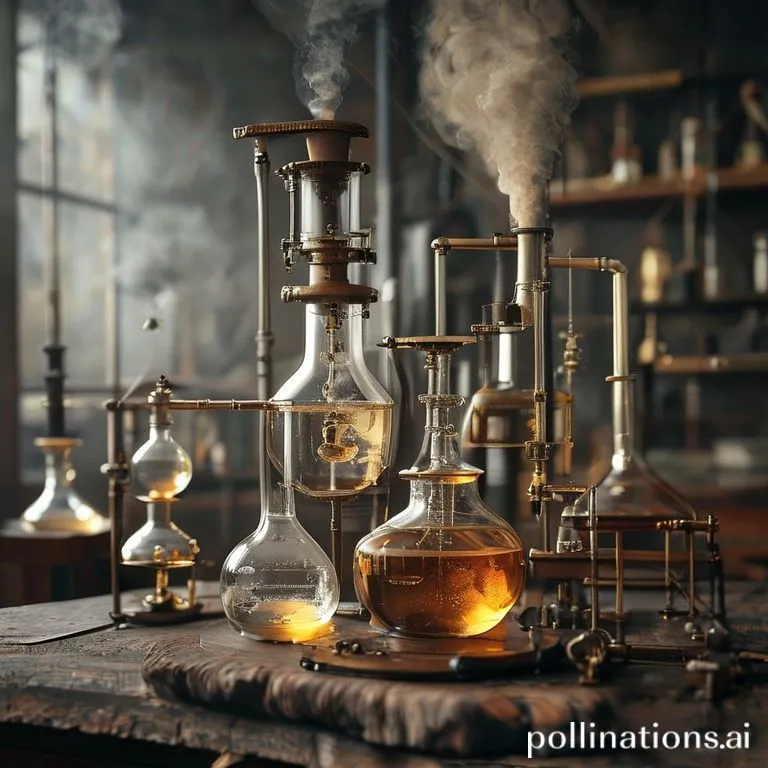
Brief description
Distillation is a physical process of separating the components or substances from a liquid mixture by using selective boiling and condensation.
It allows you to purify water, concentrate alcohol for medical or fuel use, and extract essential oils from plants.
Use / Function
Its practical purpose is separation and purification:
- Water Purification: Removing salts, bacteria, and impurities (desalination).
- Alcohol Concentration: Increasing ethanol content beyond what fermentation can achieve (for antiseptics, fuel, spirits, Rectified Spirits).
- Extraction: Obtaining essential oils and perfumes from plants.
- Refining: Separating crude oil into useful fractions (advanced).
Operating principle
The core principle is the difference in boiling points of various substances.
- Heating: The mixture is heated.
- Vaporization: The component with the lower boiling point turns into vapor first (e.g., Alcohol at ~78°C, Water at 100°C).
- Transport: The vapor travels away from the heat source.
- Condensation: The vapor is cooled (usually by passing through a tube cooled by water or air) and turns back into a liquid.
- Collection: The condensed liquid (distillate) is collected in a separate container.
How to create it
Minimum functional version (Solar Still)
- Dig a hole: In the ground.
- Place container: In the center.
- Fill: Put impure water/vegetation around the container (not inside).
- Cover: Plastic sheet over the hole, weighed down with a stone in the center (over the container).
- Wait: Sun evaporates water, it condenses on the plastic and drips into the container.
Functional version (Pot Still)
- Boiler: A pot with a lid that seals well (use dough to seal gaps).
- Condenser: A copper tube or bamboo pipe coming out of the lid.
- Cooling: The tube passes through a container of cold water or is long enough to air cool.
- Receiver: A vessel to catch the drips.
Materials needed
- Essential materials:
- Heat Source: Fire, sun.
- Vessels: Boiler and receiver (Clay, Metal, Glass).
- Condenser: Tube (Copper is best for heat transfer and removing sulfur compounds; Glass; Bamboo).
- Tools:
- Sealing material: Flour paste, clay, or cork to prevent steam loss.
Variants and improvements
- Fractional Distillation: Using a column to separate liquids with close boiling points.
- Steam Distillation: Passing steam through material (plants) to carry volatile oils.
- Reflux: Allowing some vapor to condense and fall back to increase purity.
Limits and risks
- Explosions: A blocked system creates a pressure bomb. ALWAYS ensure the path is open.
- Methanol: In alcohol distillation, the “foreshots” (first part) can contain methanol, which is toxic (blindness/death). Discard the first portion.
- Burns: Steam causes severe burns.
- Material Safety: Don’t use lead solder or toxic materials in the construction.