Generated with AI2 min read
Alembic
Brief description
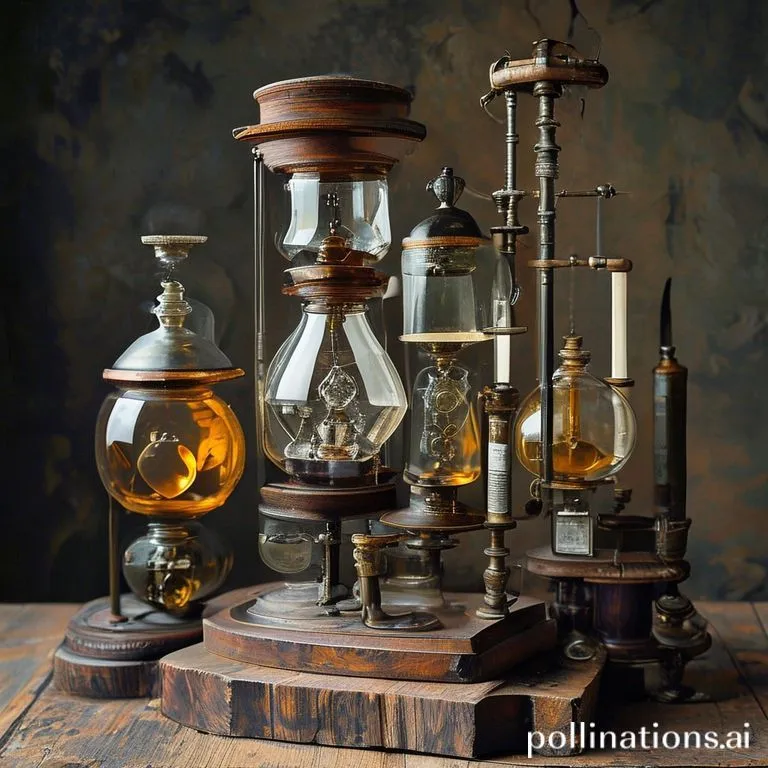
An alembic is an alchemical still consisting of two vessels connected by a tube, used for distilling chemicals, medicines, perfumes, and food products. It is the grandfather of modern distillation apparatus.
It allows you to perform distillation efficiently by channeling vapor from a heated pot to a cooling vessel.
Use / Function
Its primary practical purpose is controlled distillation:
- Production of Spirits: Brandy, whiskey, etc.
- Essential Oils: Extracting scents and medicinal compounds.
- Alchemy/Chemistry: Purifying acids and other chemicals.
Operating principle
It directs rising vapor into a downward sloping tube for collection.
- Cucurbit (Pot): Contains the liquid to be distilled; heated from below.
- Anbik (Head/Helm): Covers the pot. It catches the rising vapor, which cools slightly on the head’s walls and channels into the spout.
- Solen (Tube/Beak): Transports the vapor/liquid to the receiver.
- Receiver: Collects the distillate.
How to create it
Minimum functional version (Improvised)
- Pot: Any fire-safe pot.
- Lid: An inverted cone or bowl placed on top.
- Catch: A smaller bowl floating inside the pot or suspended to catch drips from the inverted lid (if cooling is applied to top of lid).
- External: Ideally, a tube leads out from the lid to a cooling coil.
Classic Copper Alembic
- Forming: Hammer copper sheets into a pot shape and a bulbous head with a swan-neck spout.
- Joining: Rivet and solder (lead-free!) the seams.
- Condenser: Connect the spout to a worm (coil) submerged in a barrel of cold water.
Materials needed
- Essential materials:
- Copper: Traditional and best. It removes sulfur tastes from alcohol and conducts heat well.
- Clay/Ceramics: Historical alternative, harder to seal and heat control is slower.
- Glass: Good for laboratory and seeing the process, but fragile.
- Tools:
- Hammer/Anvil: For shaping metal.
- Kiln: For firing clay.
Variants and improvements
- Retort: A single glass vessel with a long downward neck (simpler, for small batches).
- Pot Still: The modern large-scale version of the alembic.
- Reflux Still: Adds a column to the alembic for higher purity in one run.
Limits and risks
- Sealing: Leaks mean lost product and danger of fire/explosion (alcohol vapor is explosive).
- Corrosion: Acidic washes can corrode copper; it needs cleaning.
- Pressure: Ensure the outlet is never blocked.