Generated with AI2 min read
Cart
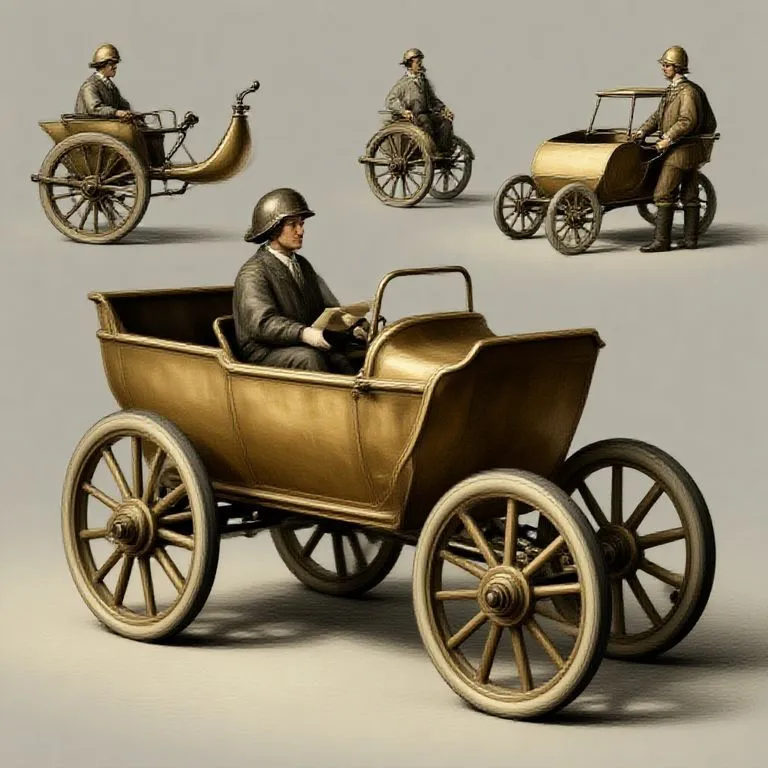
Brief description
A cart is a two-wheeled vehicle designed for transport, typically pulled by a person or a draft animal. It is a fundamental advancement in logistics, allowing for the movement of loads far heavier than what can be carried.
Use / Function
- Transport of Goods: Moving crops, wood, stones, or trade goods.
- Transport of People: Basic transportation for travel.
- Warfare: Early chariots were essentially specialized carts.
Operating principle
The cart utilizes the wheel and axle to reduce friction.
- Load Distribution: The load is balanced over the axle, meaning the draft animal (or person) only needs to overcome rolling resistance and inertia, rather than supporting the full weight.
- Rolling vs. Sliding: Wheels roll over the ground, drastically reducing friction compared to a sled.
How to create it
- Frame Construction: Build a rectangular frame from sturdy wood planks.
- Axle Mounting: Securely attach the axle (see Axle) to the underside of the frame.
- Wheel Attachment: Mount the wheels (see Wheel) onto the axle.
- Shafts/Tongue: Attach two long shafts (for a single animal) or a central tongue (for pairs) to the front of the frame.
- Harnessing: Use leather or rope to connect the shafts to the animal.
Materials needed
- Wood: Planks for the body, beams for the frame and shafts.
- Axle: A strong wooden or metal axle.
- Wheels: Two sturdy wheels.
- Fasteners: Nails, pegs, or rope to hold the structure together.
Variants and improvements
- Handcart: Smaller, pushed or pulled by a human.
- Wagon: A four-wheeled vehicle (requires a steering mechanism for the front axle).
- Chariot: Lightweight, fast cart for war or racing.
- Tumbrel: A cart that can tilt to dump its load.
Limits and risks
- Terrain: Difficult to use on very rough, muddy, or steep terrain.
- Balance: If the load is not balanced over the axle, it puts excessive strain on the animal (lifting them up or pushing them down).
- Maintenance: Axles need regular greasing; wheels can break.