Generated with AI3 min read
Fishing
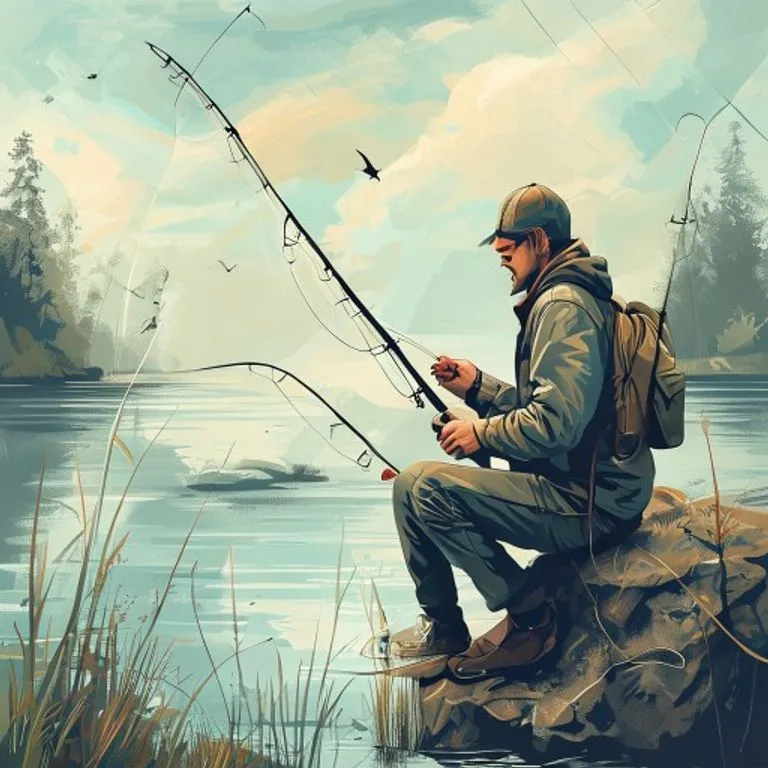
Brief description
Fishing is the practice of locating, attracting, and capturing aquatic animals for food, materials, or trade. It combines observation of water conditions with tools that guide, hook, or contain the catch.
Use / Function
- Nutrition: Provides protein and fats from fish and shellfish.
- Materials: Supplies bone, skin, and oil for tools and crafts.
- Trade: Dried or smoked fish becomes transportable value.
- Resilience: Expands food options when land hunting is scarce.
- Scale: From personal shore harvesting to small-boat operations.
Operating principle
- Attraction: Bait, scent, or motion from a Fishing Lure draws fish to a target zone.
- Capture: A Fishing Hook or Spear creates a secure hold.
- Containment: A Fishing Net or basket keeps fish from escaping.
- Leverage: Fishing Line and Rope transmit force without breaking.
How to create it
- Read the water: Look for ripples, shadows, or shallow shelves where fish feed.
- Choose a method: Use a hand line, net set, or spear based on water depth and visibility.
- Prepare gear: Tie knots, check hooks, and inspect nets for tears.
- Set and wait: Place gear at dawn or dusk when fish are most active.
- Handle and preserve: Dispatch quickly, then dry, smoke, or salt for storage.
Required technological level
Basic to intermediate. Shore fishing is low tech; nets and boats raise the skill level.
Materials needed
- Essential: Plant fibers for line or netting, Wood for poles and floats, Bone or Iron for hooks.
- Support: Cork for floats, Stone for sinkers, Resin for sealing knots.
- Tools: Knife, awl, and a small fire for drying and fixing gear.
Variants and improvements
- Hand line: Minimal gear and fast to repair.
- Set net: Higher yield but requires maintenance.
- Weir or trap: Passive capture in rivers or tidal zones.
- Boat fishing: Extends reach using Canoes or Simple Boats.
Traps and nets in fishing
- Traps: Funnel entrances, stake lines, or basket traps guide fish with the current and hold them without constant tending.
- Fishing Net: Mesh size targets species, while floats and sinkers keep a vertical wall; set at chokepoints and check often to avoid spoilage.
Limits and risks
- Bycatch: Nets can trap non-target species.
- Spoilage: Fish spoils quickly without preservation.
- Water hazards: Cold shock, currents, and capsizing risk.
- Overharvest: Repeated pressure can collapse local stocks.
Related materials
- Fishing Hook: Primary capture tool for lines.
- Fishing Line: Tension path between angler and hook.
- Fishing Lure: Visual or motion attractor to trigger strikes.
- Fishing Net: Containment for higher yield.
- Rope: Stronger lines for boats and nets.
- Plant fibers: Base material for cordage.
- Resin: Seals knots and protects fibers.