Generated with AI2 min read
Fishing Net
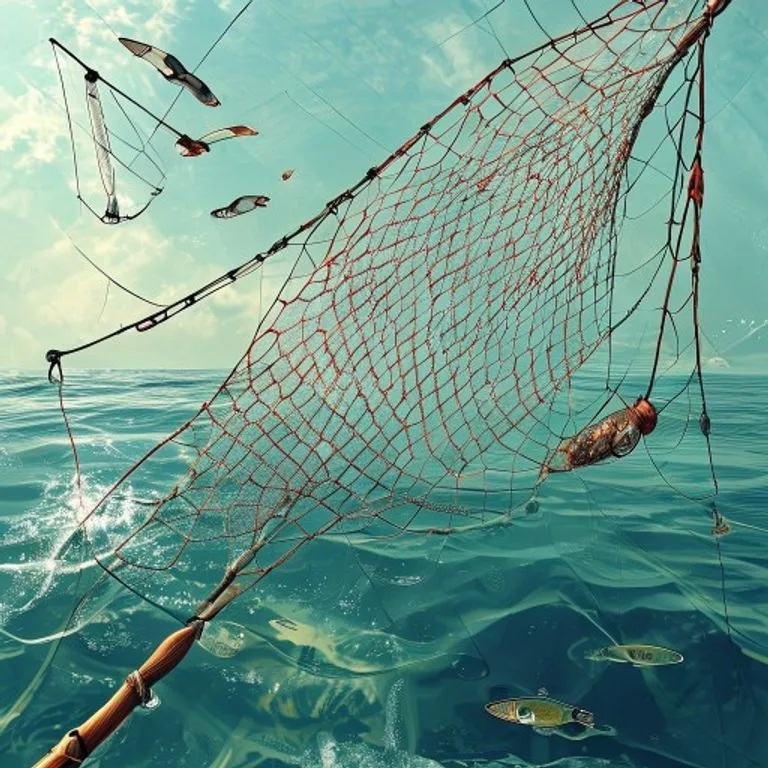
Made of
Brief description
A fishing net is a mesh of cordage used to entangle or enclose fish, enabling larger catches than single-hook methods.
Use / Function
- Containment: Surrounds or blocks fish movement.
- Efficiency: Captures multiple fish in a single set.
- Adaptability: Works in rivers, lakes, and coastal waters.
Operating principle
Uniform mesh openings guide fish into pockets or against barriers. Floats keep the net upper edge at the surface while weights hold the lower edge down, forming a vertical wall or enclosure.
How to create it
- Make twine: Twist Plant fibers into thin cord.
- Knot the mesh: Use a netting needle and spacer to tie consistent squares.
- Add floats: Lash Cork or carved Wood to the top line.
- Add sinkers: Tie Stone along the bottom line.
- Inspect and repair: Replace broken knots before each use.
Materials needed
- Essential: Plant fiber twine for mesh.
- Structure: Wooden float line and stone sinkers.
- Tools: Knife, awl, netting needle, measuring spacer.
- Substitutes: Twisted bark or rawhide strips for mesh, carved gourds or light wood for floats.
Variants and improvements
- Cast net: Thrown by hand for quick capture.
- Gill net: Mesh sized to catch fish by the gills.
- Seine net: Pulled to enclose fish against shore.
Limits and risks
- Bycatch: Mesh can trap non-target species.
- Snagging: Nets tear on rocks and submerged wood.
- Labor: Repair and drying require regular effort.