Generated with AI3 min read
Traps
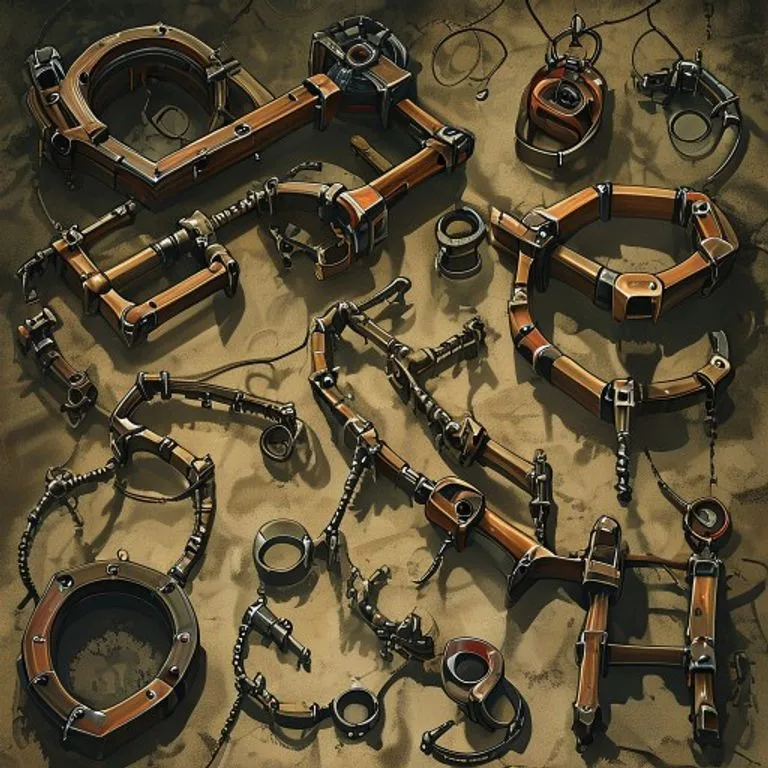
Brief description
Traps are mechanical devices designed to capture or kill animals by guiding movement toward a trigger that releases stored energy or a falling weight.
Use / Function
- Food capture: Obtain small game for protein and fat.
- Pest control: Protect crops, storage, and structures.
- Apiary protection: Reduce rodent and predator pressure near Beekeeping sites.
- Fishing: Funnel traps, weirs, or basket traps for passive river and tidal capture.
- Defense and alarm: Deter intruders or signal movement.
- Scale: Individual, family, or small-group use.
Operating principle
Traps combine a trigger with stored energy or gravity. The target animal applies pressure or movement to the trigger, releasing a loop, jaw, or deadfall. Placement funnels the animal into the trap’s path, and concealment reduces avoidance.
How to create it
- Define the target: Identify the animal, its size, and its travel routes.
- Choose a trap type: Snare, deadfall, pitfall, or cage trap.
- Build the trigger: Use a balanced peg, notch, or toggle that releases with light pressure.
- Set the trap: Place on a narrow path or at a den entrance and guide movement with sticks or stones.
- Camouflage and stabilize: Cover human scent and ensure the trap does not wobble.
- Check regularly: Reduce suffering, prevent spoilage, and reset if needed.
Materials needed
- Essential: Wood frame, Stone weight, Plant fibers for cordage, Leather thongs, Iron hooks or jaws.
- Tools: Knife, mallet, shovel.
- Substitutes: Bent saplings for spring power, Wire for snares, Rope for lines and anchors.
Variants and improvements
- Snare trap: Loop tightens around the animal’s leg or neck.
- Deadfall trap: Heavy weight drops when the trigger is released.
- Pitfall trap: Hidden pit lined with stakes for larger animals.
- Grouse pit: Shallow, covered pit for ground birds.
- Cage trap: Door closes behind the animal for live capture.
- Mouse trap: Small snap or box trap for rodents.
- Fly catcher: Sticky or funnel trap for flies and gnats.
- Kulema trap: Boxed spring trap for small predators.
- Wolf pen trap: Large corral with a funnel and one-way gate for big predators.
- Tension snare: Bent sapling lifts the animal to prevent escape.
- Fish weir: Stakes and brush guide fish into a holding area.
- Basket fish trap: Funnel basket with a narrow throat that keeps fish inside.
Limits and risks
- Non-target capture: Can harm pets or protected wildlife.
- Safety: Springs and deadfalls can injure the builder.
- Weather: Rain and wind can trigger or disable traps.
- Regulation: Local laws may restrict or ban certain traps.