Generated with AI2 min read
Anatomy & Blood
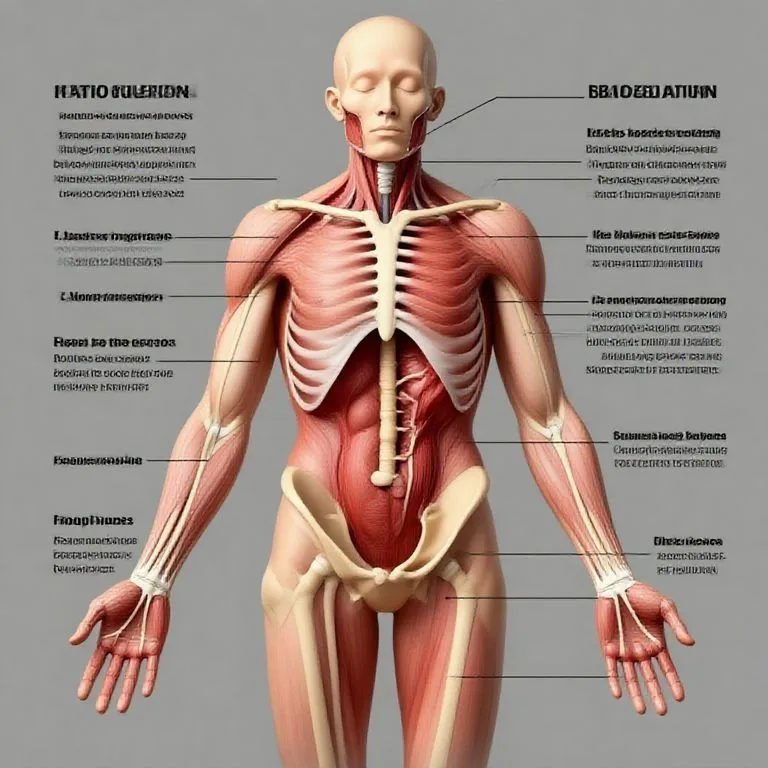
Brief description
Anatomy & Blood is a practical field knowledge set that maps the body’s main structures and explains how blood moves, how it is lost, and how to protect it during care.
Use / Function
- Orientation: Identify bones, muscles, and surface landmarks for safer handling.
- Circulation awareness: Locate major arteries and veins to avoid or control bleeding.
- Procedure guidance: Support careful use of Surgery Tools and Needle work.
- Bleeding control: Apply pressure, packing, and elevation in a structured way.
- Scale: Individual care to small-group field medicine.
Operating principle
- Layered structure: Skin, fascia, muscle, and bone create predictable paths and barriers.
- Flow and pressure: Arteries pulse out, veins return blood; pressure determines bleeding speed.
- Clotting: Clean, stable contact and compression help blood coagulate and seal vessels.
- Shock limits: Blood volume loss rapidly reduces oxygen delivery and consciousness.
How to create it
- Map landmarks: Use Bone references and palpation to mark joints, ribs, and major bony points.
- Trace circulation: Identify primary arteries and veins, then mark safe zones for pressure and bandaging.
- Build a reference: Draw diagrams on Paper with Ink or etch on wood or leather for durability.
- Validate with anatomy: Compare human landmarks to animal anatomy for practice and refinement.
- Field test: Use real scenarios to refine notes and update procedures.
Materials needed
- Essential materials: Paper, Ink, Bone references, Steel tools for precise work.
- Hygiene: Soap, Water, Alcohol, Cotton.
- Tools: Measuring cord, fine points, Scalpel, Surgical Thread.
- Possible substitutes: Charcoal for ink, bark for paper, carved wood models instead of bone.
Variants and improvements
- Pocket cards: Essential landmarks and bleeding control steps.
- Layered charts: Transparent sheets to separate skin, muscle, and vessel maps.
- Color coding: Red for arteries, blue for veins, black for nerves.
- Expanded atlas: Regional anatomy for head, chest, abdomen, and limbs.
Limits and risks
- Misidentification: Wrong landmarks can damage nerves or arteries.
- False confidence: Knowledge does not replace training or experience.
- Infection: Poor hygiene during practice causes contamination.
- Ethics: Avoid harm when practicing; use animal remains or diagrams instead of live subjects.