Generated with AI2 min read
Surgery Tools
Brief description
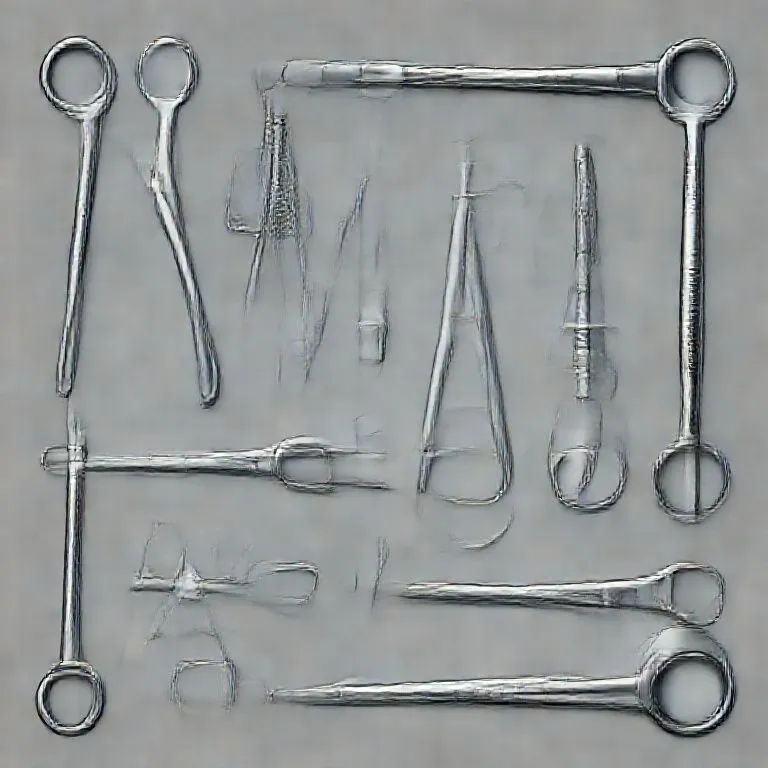
Surgery tools are a minimal set of precision instruments used to cut, hold, and close tissue during minor procedures, usually alongside careful cleaning and sterilization.
Use / Function
- Wound closure: Suturing with Surgical Thread and a Needle.
- Cutting and access: Making controlled incisions with a Scalpel.
- Tissue handling: Holding and positioning tissue with forceps or clamps.
- Hemostasis: Controlling bleeding through pressure and clamping.
- Scale: Field care to small clinical procedures.
Operating principle
- Sharp edges focus force into a tiny area to cut cleanly.
- Gripping surfaces apply controlled pressure to hold tissue or needles without crushing them.
- Leverage and geometry provide precision and mechanical advantage.
- Sterility prevents infection; tools must be cleaned and disinfected before contact.
How to create it
- Select the core tools: scalpel, forceps, surgical scissors, needle holder, and a probe or retractor.
- Forge or stock-remove: shape tools from steel, then grind and polish working surfaces.
- Heat treat: harden and temper edges for cutting tools; keep clamps tough but not brittle.
- Finish and align: smooth edges, check alignment of jaws and hinges, and remove burrs.
- Sterilize: boil, use Alcohol, or pressure steam when available.
Materials needed
- Essential materials: Steel for instruments, Surgical Thread, Cotton for dressings.
- Cleaning and sterilization: Soap, Water, Alcohol.
- Tools: forge or furnace, anvil, files, sharpening stones, and hinges or rivets for articulated tools.
Variants and improvements
- Field kit: compact set with replaceable blades and minimal clamps.
- Operating set: full range of sizes with specialized instruments.
- Stainless steel: improved corrosion resistance and easier sterilization.
- Disposable blades: consistent sharpness with less maintenance.
Limits and risks
- Infection: Poor sterilization can be fatal.
- Skill limits: Precision tools do not replace surgical training.
- Tissue damage: Excess force, dull edges, or poor technique can worsen injuries.
- Pain and shock: Procedures can cause severe trauma without anesthesia.