Generated with AI4 min read
Tesla Turbine
Brief description
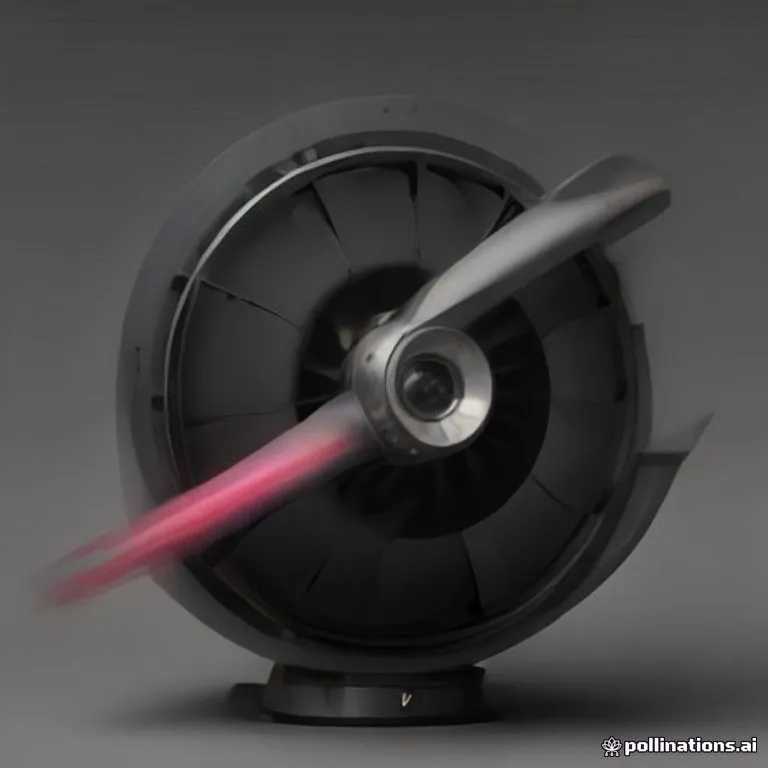
The Tesla turbine is a bladeless centripetal flow turbine patented by Nikola Tesla in 1913. Known as a boundary layer or cohesion turbine, it consists of a series of smooth parallel discs key-slotted to a central shaft and enclosed within a cylindrical housing. Instead of directing fluid against curved blades or buckets, the Tesla turbine relies on boundary layer adhesion and viscous drag of a moving fluid (steam, compressed air, or water) to rotate the discs at extremely high speeds.
Use / Function
- Primary use: High-speed rotary mechanical drive and compact power generation using steam, compressed gas, or pressurized liquids.
- Secondary uses: Reversible fluid pump or blower when driven mechanically by an external motor; processing viscous fluids without clogging.
- Scale: Small to medium-scale mechanical installations and portable power generation units.
Operating principle
Boundary Layer and Viscous Drag Dynamics:
- Fluid Injection: Pressurized working fluid (steam or compressed air) enters through tangential nozzles at the outer perimeter of the cylindrical housing.
- Adhesion and Viscosity: Due to surface tension and molecular adhesion, a thin layer of fluid adheres to the smooth surface of the rotating discs (boundary layer). Viscous drag transfers kinetic energy from the fluid to the discs.
- Spiral Inward Path: As the fluid loses kinetic energy and velocity relative to the rotating discs, it spirals inward toward central exhaust ports located near the center shaft.
- Exhaust Discharge: Spent fluid exits axially through central holes in the discs and housing vents, providing continuous smooth rotation without blade erosion or shock losses.
How to create it
1. Rotor Disc Stack Assembly
- Cut multiple thin, flat, circular discs of uniform thickness from Steel or Bronze sheets.
- Drill central exhaust ports around the inner hub area of each disc and precision-cut keyways.
- Mount the discs on a central Steel shaft using thin ring spacers to maintain a narrow, uniform gap between adjacent discs.
2. Cylindrical Casing and Tangential Nozzles
- Machine or cast a cylindrical outer housing from Cast Iron or heavy-gauge steel.
- Bore one or more tangential inlet nozzles into the perimeter of the housing positioned precisely at a tangent to the outer edges of the disc stack.
3. Shaft Bearings and End Plates
- Secure end plates on both sides of the housing with low-friction high-speed bearings supporting the shaft.
- Seal the housing perimeter to prevent pressurized fluid leakage while allowing central axial exhaust.
Materials needed
- Rotor Discs & Shaft: Smooth Steel sheet or Bronze plate and ground steel shafting.
- Housing & End Plates: Heavy Cast Iron or structural steel casing.
- Working Fluid: Pressurized Water, steam, or compressed air.
- Hardware: Precision spacers, high-speed bearings, and heat-resistant seals.
Variants and improvements
- Reversible Tesla Turbine: Features dual symmetrical nozzles angled in opposite directions, allowing instantaneous reversal of shaft rotation by switching the active nozzle valve.
- Tesla Pump: Reverses operation by driving the central shaft with an external engine to pump fluids radially outward with minimal fluid shearing.
- Composite/Plastic Discs: Modern lightweight disc materials for reduced rotational inertia and rapid acceleration in low-temperature compressed air applications.
Limits and risks
- Lower Thermal Efficiency: At conventional operating speeds, thermal efficiency is lower than multi-stage bladed turbines due to fluid shear losses.
- High Rotational Speed Requirements: Optimal efficiency requires extremely high RPMs, placing high centrifugal stress on disc materials and bearings.
- Precision Gap Criticality: Disc spacing must be precisely matched to the viscosity and density of the working fluid; incorrect spacing severely degrades performance.