NaturalGenerated with AI2 min read
Iron Oxide
Fe2O3
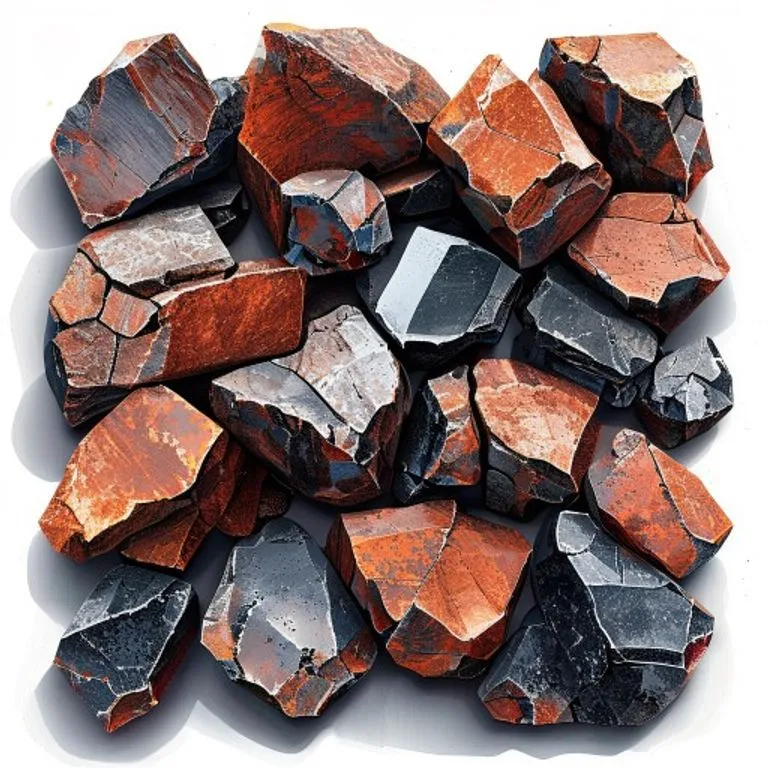
Iron oxide is a chemical compound composed of iron and oxygen. It exists in nature as rust and ores like hematite. In a refined form, it is known as “Jeweler’s Rouge” or “Red Rouge,” a critical abrasive for achieving optical-quality finishes on glass and metals.
Description of what it is like
- Appearance: A fine, dusty powder ranging from bright red (Hematite/Rust) to black (Magnetite) or yellow (Limonite).
- Texture: Silky when ground fine, but gritty if impurities remain.
- Staining: It stains everything it touches deep red.
Origin and where to find it
- Natural: Found as red earth (Red Ochre) or hard rocks (Hematite).
- Synthetic (Rust): Forms naturally on Iron exposed to Water and air.
Minimum processing required
To make polishing rouge:
- Rusting: Allow scrap Iron to rust completely in a bucket of salted water.
- Scraping: Scrape off the rust scale.
- Washing (Levigation): Mix the powder with water. Let the heavy coarse particles settle for a few seconds, then pour off the water containing the fine particles into another container. Let that settle. This ensures only the finest particles are used.
- Calcining (Optional): Heating the powder changes its color (to darker red/purple) and hardness, making it cut faster.
Tools needed to work on it
- Scrapers: To remove rust.
- Containers: For washing and separating particles.
- Kiln/Fire: For calcining (optional).
Common forms of use
- Polishing Paste: Mixed with water or oil to polish Gold, Silver, and Glass lenses.
- Pigment: Mixed with oil or binder for red paint.
- Thermite: Mixed with Aluminum powder to create intense heat for welding.
Possible substitutes
- Tripoli (Rottenstone): Another fine silica-based abrasive.
- Cerium Oxide: Modern, faster glass polish (rare earth).
- Wood Ash: A very mild abrasive for cleaning, but not optical quality.
- Toothpaste: Often contains mild abrasives (chalk/silica) suitable for light polishing.
Limitations and common failures
- Contamination: If a single grain of sand gets into the rouge, it will scratch the workpiece instead of polishing it.
- Staining: Difficult to remove from clothes and porous surfaces.
Risks and safety
- Inhalation: Long-term inhalation of iron oxide dust can cause siderosis (benign lung disease).
- Mess: It spreads easily and is hard to clean.
Related materials
Properties
- Fine abrasive
- Red pigment
- Chemical reactant
- Paramagnetic (some forms)
Used for
- Polishing (Jeweler's Rouge)
- Pigment (Red Ochre)
- Thermite welding
- Ore smelting
Manufacturing / Process
Natural mining (Hematite) or rusting iron and calcining the powder.