Generated with AI3 min read
Hydraulic Jack
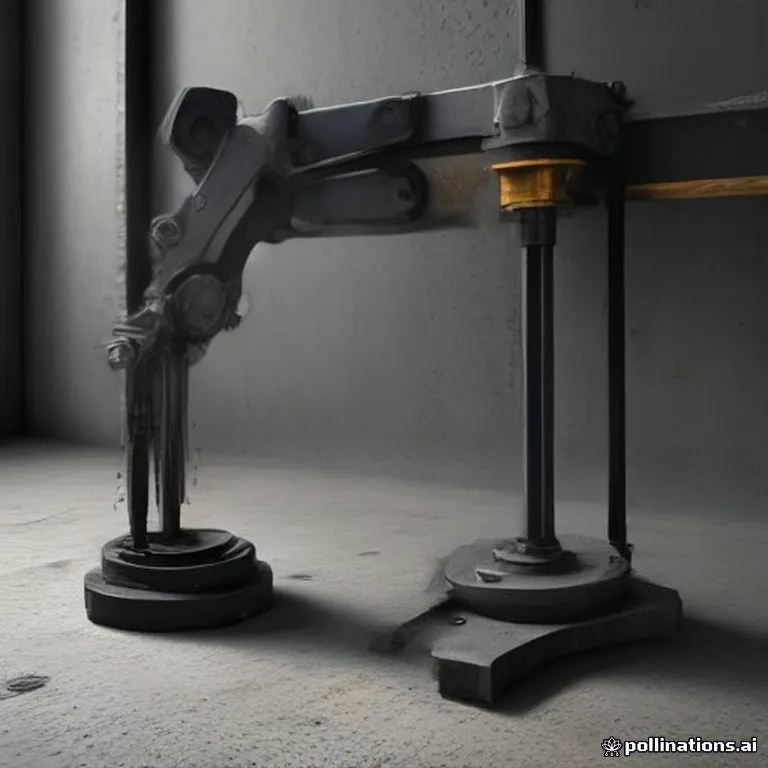
Brief description
A hydraulic jack is a compact, hand-operated mechanical device that uses fluid pressure to lift heavy objects, such as vehicles, structural beams, or machinery. Operating on Pascal’s law, it converts small manual pumping inputs into massive lifting force.
Use / Function
- Vehicle Maintenance: Elevating automobiles or heavy transport for wheel and undercarriage repair.
- Construction & Shoring: Lifting beams, leveling structural foundations, or tensioning cables.
- Rescue & Mining: Clearing heavy debris or supporting collapsed shafts.
- Scale: Domestic, workshop, and industrial construction sites.
Operating principle
The hydraulic jack operates on Pascal’s Principle: pressure applied to an enclosed, incompressible fluid is transmitted equally throughout the liquid.
- Pumping Motion: Manual movement of a small lever pushes a small plunger into a small cylinder.
- Fluid Transfer: Fluid (Vegetable Oil or hydraulic fluid) is drawn from a reservoir through a one-way check valve into the small cylinder.
- Pressure Accumulation: Pushing the lever down forces fluid through a second check valve into a larger cylinder beneath the lifting ram.
- Lifting Force: Because the ram has a much larger surface area than the pump plunger, the force is multiplied proportionally ($F_2 = F_1 \times A_2 / A_1$).
- Release Valve: Opening a threaded release valve allows fluid to flow back into the reservoir, safely lowering the ram under gravity.
How to create it
- Machining the Base and Cylinders: Cast or turn a heavy-walled Steel or Cast Iron cylinder for the main lifting ram, and a smaller parallel cylinder for the pump plunger.
- Fabricating Pistons and Ram: Machine smooth cylindrical steel shafts to serve as the pump plunger and main lifting ram.
- Fitting High-Pressure Seals: Install flexible Leather U-cup seals or oil-resistant rubber rings at the base of both pistons to ensure a leak-proof hydraulic seal under pressure.
- Installing Check Valves: Fit two spring-loaded ball valves in the internal oil passageways: one allowing oil to enter the pump cylinder from the reservoir, and one allowing oil to flow into the main ram cylinder without returning.
- Adding Reservoir and Release Screw: Enclose the cylinders within an outer casing that serves as an oil reservoir, and install a threaded needle valve to connect the ram cylinder back to the reservoir for controlled lowering.
- Filling Fluid: Fill the reservoir with clean Vegetable Oil or light mineral oil and bleed all air bubbles from the hydraulic circuit.
Materials needed
- Steel or Cast Iron: For the base, cylinders, ram, and pump plunger.
- Leather: For tight, high-pressure piston cup seals.
- Vegetable Oil: Non-compressible fluid medium for pressure transmission.
- Ball Bearings and Springs: For the internal non-return check valves.
Variants and improvements
- Bottle Jack: Vertical cylindrical design, highly portable and able to lift up to 50 tons.
- Floor / Trolley Jack: Horizontal cylinder with a long handle and wheels for rolling under low-clearance vehicles.
- Screw Jack: Purely mechanical alternative using threaded rods, immune to fluid leaks but less efficient.
Limits and risks
- Fluid Leaks: Damaged seals cause gradual pressure loss and unintended lowering of heavy loads.
- Overloading: Exceeding structural limits can crack the steel base or blow seals catastrophically.
- Stability: Requires a flat, solid surface; tipping while under load poses severe crushing hazards.