Generated with AI2 min read
Lever
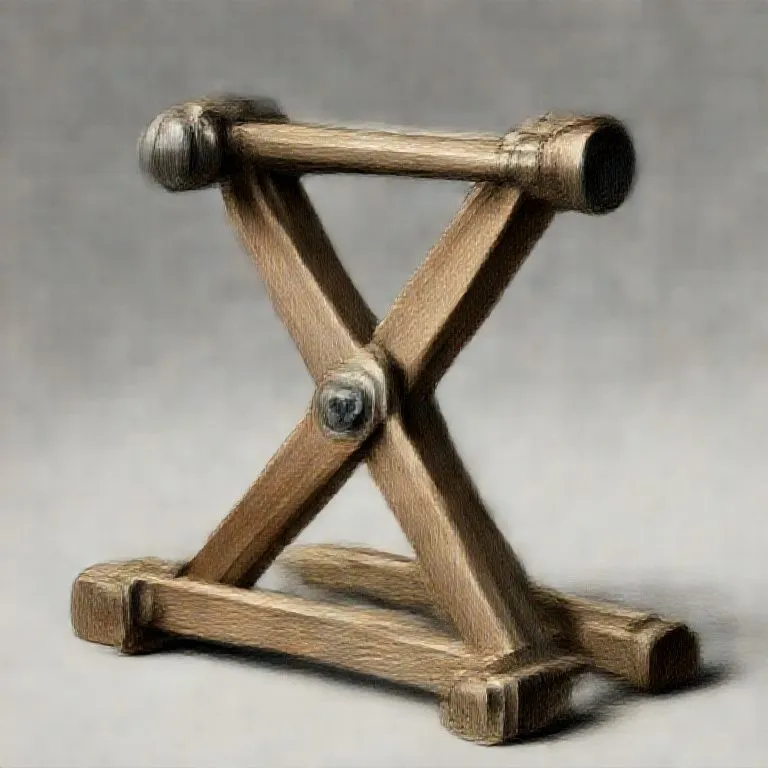
Brief description
A lever is a simple machine consisting of a beam or rigid rod pivoted at a fixed hinge, or fulcrum. It is used to multiply the force applied to an object.
Use / Function
- Lifting: Moving heavy loads with less effort.
- Amplification: Increasing the range of motion or speed.
- Precision: Fine-tuned movement in mechanical devices.
- Scale: Domestic to heavy construction.
Operating principle
The lever works on the principle of moments. By placing the fulcrum closer to the load than to the point where force is applied, a small force applied over a longer distance can lift a heavy weight over a shorter distance.
How to create it
- Selection: Find a long, rigid object (beam) that won’t bend under pressure.
- Fulcrum: Select a stable point or object (like a rock) to serve as the pivot.
- Setup: Place the beam on the fulcrum.
- Application: Place the load on one end and apply force on the other.
Materials needed
- Beam: A strong wooden pole, metal bar, or sturdy branch.
- Fulcrum: A stone, a log, or a purpose-built hinge.
- Support: A stable surface to rest the fulcrum on.
Variants and improvements
- First-class lever: Fulcrum between force and load (e.g., see-saw, crowbar).
- Second-class lever: Load between fulcrum and force (e.g., wheelbarrow).
- Third-class lever: Force between fulcrum and load (e.g., tweezers, human arm).
- Compound levers: Systems of multiple levers to further increase mechanical advantage.
Limits and risks
- Structural Failure: The beam can snap if the load is too heavy.
- Stability: If the fulcrum slips, the load may fall suddenly.
- Range: Limited by the length of the beam and the space available for movement.