Generated with AI3 min read
Greenhouse
Brief description
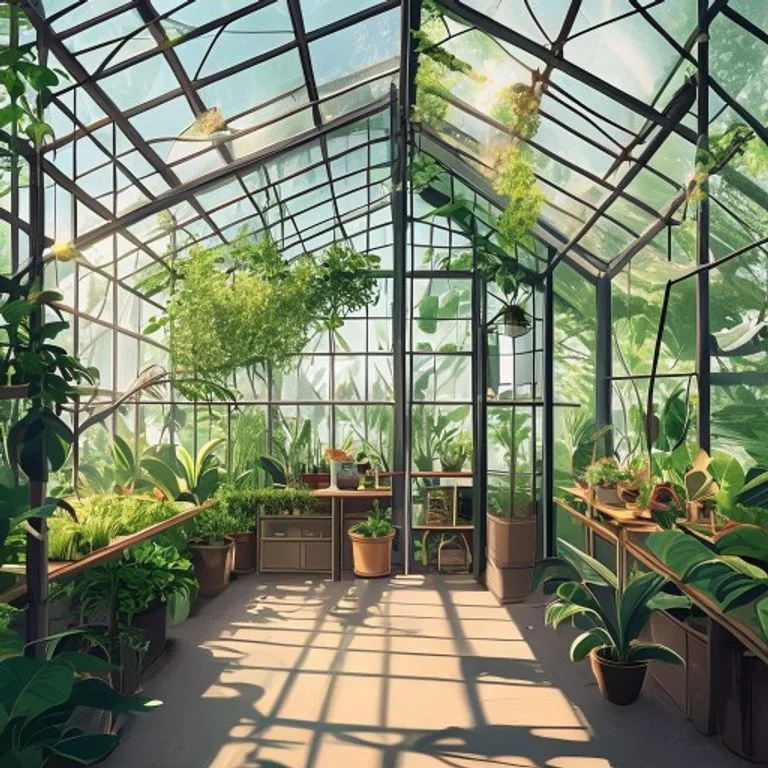
A greenhouse is a structure with walls and a roof made mainly of transparent material, such as glass or plastic, in which plants requiring regulated climatic conditions are grown. It traps solar radiation to create a warmer environment than the surrounding area.
Use / Function
- Season extension: Allows planting earlier in spring and harvesting later in autumn.
- Climate control: Enables the cultivation of tropical or sensitive plants in cold regions.
- Protection: Shields crops from extreme weather (frost, heavy rain, wind) and some pests.
- Seed starting: Provides an ideal environment for germinating seeds before transplanting them outdoors.
Operating principle
The greenhouse operates on the “greenhouse effect”:
- Solar Gain: Short-wave solar radiation passes through the transparent cover and is absorbed by plants and soil inside.
- Thermal Emission: The absorbed energy is re-emitted as long-wave infrared radiation (heat).
- Trapping: The glass or plastic cover is opaque to infrared radiation, preventing the heat from escaping by convection and radiation.
- Thermal Mass: Objects inside (like stone walls or water barrels) store heat during the day and release it at night.
How to create it
- Frame construction: Build a sturdy frame using Wood, bamboo, or metal.
- Glazing: Cover the frame with transparent panels of Glass or sheets of Plastic.
- Sealing: Ensure the structure is airtight to prevent heat loss, but include operable vents.
- Foundation: Use Brick or Stone for a foundation to provide stability and thermal mass.
- Technical Level: Intermediate. Requires knowledge of structural stability and glazing techniques.
Materials needed
- Transparent Cover: Glass (most durable) or Plastic film (cheaper/easier).
- Structure: Wood, Wire, or metal pipes.
- Thermal Mass: Dark-colored barrels filled with Water or a Stone floor.
- Tools: Saw, Hammer, and measuring tools.
Variants and improvements
- Cold Frame: A low-to-the-ground box with a glass lid, used for small-scale seed starting.
- Walipini (Underground Greenhouse): Built partially underground to utilize the earth’s constant temperature for insulation.
- Polytunnel: A large, tunnel-like structure covered in polyethylene plastic.
- Automated Greenhouse: Uses sensors and motors to control ventilation, irrigation, and heating.
Limits and risks
- Overheating: Without proper ventilation, temperatures can rise high enough to kill plants in a few hours.
- Humidity: Trapped moisture can lead to fungal diseases and rot.
- Structural Failure: Large glass panels are heavy and fragile; plastic can be torn by high winds.
- Maintenance: Glass requires regular cleaning to maintain light transmission.
Related Inventions
- Passive Ventilation: Essential for temperature control.
- Simple Irrigation: Often integrated for plant maintenance.