Generated with AI2 min read
Clothing and fabrics
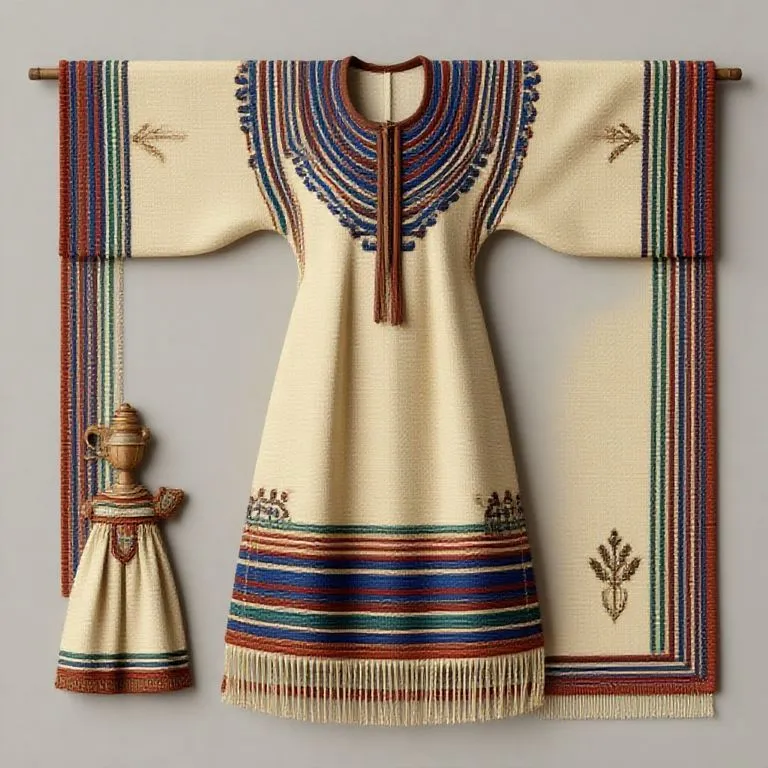
Brief description
Clothing and fabrics are body coverings made from animal or vegetable materials to protect the body and maintain temperature.
Use / Function
- Thermal protection: Insulation against cold or excessive heat.
- Physical protection: Barrier against abrasions, insects, and solar rays.
- Transport: Allows adding pockets or anchor points for tools.
- Scale: Individual.
Operating principle
It traps a layer of air near the skin that acts as a thermal insulator. Fabrics allow for breathability (evaporation of sweat) while blocking direct heat loss through convection.
How to create it
- Obtainment: Tan animal skins (Leather) or collect plant/animal fibers (linen, cotton, wool, silk).
- Processing: Spin the fibers to create long, strong threads.
- Joining: Weave the threads on a loom or sew skin pieces together using bone needles and tendons or threads.
- Technical level: Basic (skins) to Intermediate (fabrics).
Materials needed
- Essential: Skins, wool, cotton, silk, or bark fibers.
- Tools: Scrapers for skins, spindles for spinning, needles (bone/wood), simple looms.
- Substitutes: Large leaves, beaten bark (tapa).
Variants and improvements
- Unsewn skins: Simple capes.
- Sewn clothing: Fitted to the body, more thermally efficient.
- Loom-woven fabrics: Lighter, more versatile, and easier to wash.
- Dyed clothing: Treated with Textile Dye for social signaling or camouflage.
Limits and risks
- Degradation: Organic materials rot with moisture if not treated.
- Parasites: Clothing can harbor lice or mites if not kept clean.
- Flammability: Dry fibers burn easily.