Generated with AI2 min read
Marine Chronometer
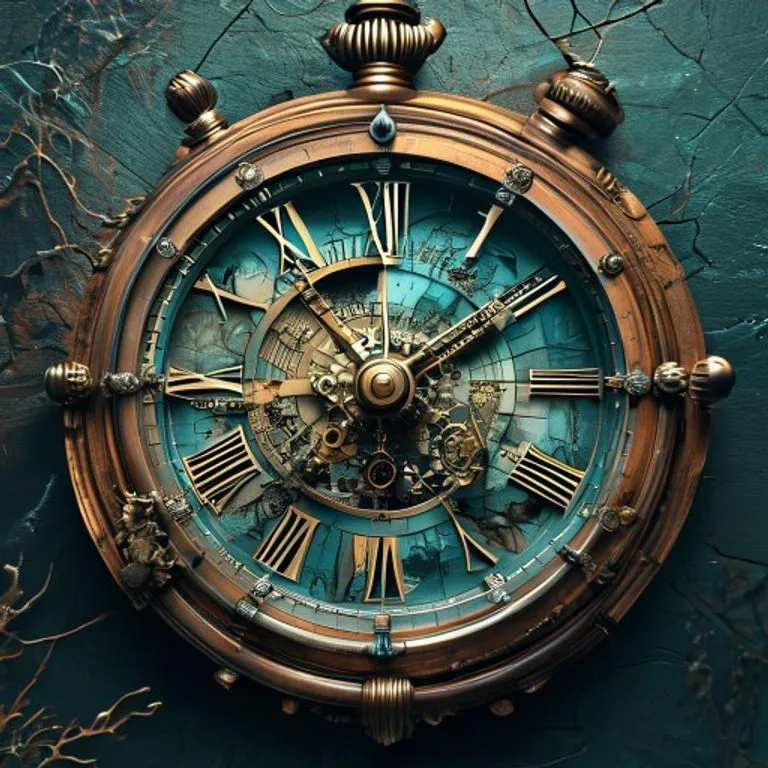
Brief description
An ultra-high precision mechanical clock designed specifically to work at sea. Its main purpose is to allow navigators to determine geographical longitude by measuring the exact time at a reference meridian (such as Greenwich).
Use / Function
- Navigation: Determine longitude by comparing local time (solar) with chronometer time (home port time).
- Expeditions: Precise mapping of coastlines and islands.
Operating principle
Works like a refined mechanical watch but solves critical sea problems:
- Balance Wheel: Replaces the pendulum (which doesn’t work on a moving ship).
- Gimbal Suspension: Keeps the clock level regardless of the ship’s roll.
- Thermal Compensation: Uses bimetallic strips in the balance wheel to adjust its shape and maintain a constant period under temperature changes.
- Constant Force: A mechanism (fusee) equalizes the mainspring’s force as it unwinds.
How to create it
- Mechanism: Similar to a pocket watch but larger and more robust.
- Box: A wooden box with brass suspension (gimbals).
- Adjustment: Requires months of calibration and testing at different temperatures.
Materials needed
- Essential: Brass (corrosion resistant), Steel (springs), Glass (cover), Wood (protective box).
- Tools: Maximum precision watchmaking tools.
Variants and improvements
- Atomic Clock: Modern successor, based on atom frequency (Cesium, Rubidium).
- Quartz Clock: Common electronic version today.
Limits and risks
- Cost: Historically extremely expensive and difficult to manufacture.
- Maintenance: Requires specialized cleaning and oiling.
- Cumulative Error: Even the best mechanical chronometer has a small drift that must be accounted for.