Generated with AI3 min read
Barrel
Brief description
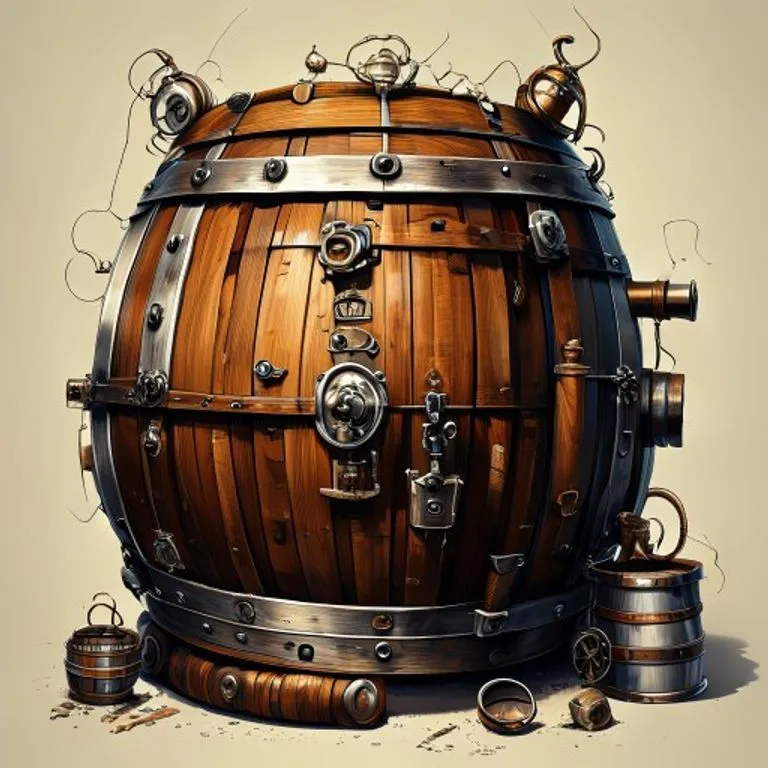
A hollow cylindrical container with a bulging center, typically made of wooden staves bound by metal hoops. Barrels are iconic for storing and aging liquids like wine and whiskey, but also for transporting dry goods.
Use / Function
- Storage: Aging alcoholic beverages (wine, whiskey), storing water, salted meat, or gunpowder.
- Transport: The bulging shape allows a heavy barrel to be rolled and pivoted easily by a single person.
- Fermentation: A vessel for brewing beer or fermenting wine.
- Scale: Individual (small keg) to industrial (large tun).
Operating principle
- Geometry: The “bilge” (bulge) makes the barrel stronger under pressure and easier to roll/turn.
- Compression: The metal hoops compress the wooden staves together. When the wood swells with moisture, the joints become watertight without glue.
- Aging: Wood (especially oak) allows slow oxygenation and imparts flavors (vanilla, tannins) to the liquid.
How to create it
- Stave Preparation: Cut and shape wooden planks (staves) to be wider in the middle and tapered at ends. Ideally from Oak.
- Assembly (Raising): Arrange staves inside a temporary metal hoop.
- Bending: Heat the staves (with fire or steam) to make them pliable, then winch them together at the open end.
- Hooping: Drive permanent Iron or Steel hoops down the barrel to lock staves in place.
- Toasting (Optional): Char the inside for flavor (for spirits).
- Heading: Insert the flat circular lids (heads) into grooves (crozes) cut into the stave ends.
Materials needed
- Staves: High-quality Wood (White Oak is best for liquids; Pine for dry goods).
- Hoops: Iron, Steel strips, or flexible wood (hazel/willow) in primitive versions.
- Tools: Hammer, driver, croze (groove cutter), winch.
Variants and improvements
- Keg: Small barrel (often metal) for beer.
- Cask: General term for wooden containers of various sizes.
- Plastic Drum: Modern industrial standard (HDPE), chemically resistant but no aging benefits.
- Rain Barrel: Adapted for collecting water from gutters.
Limits and risks
- Leakage: If the wood dries out, the staves shrink and the barrel leaks. Must be kept moist (“swelled”).
- Evaporation: “Angel’s share” - some liquid evaporates through the wood pores over time.
- Sanitation: Wood is hard to sanitize; bacteria can spoil the contents (e.g., vinegar taint).
- Weight: Extremely heavy when full; dangerous if rolling out of control.
Related inventions
- Wine: Common content.
- Beer: Common content.
- Fermentation: Process used within.
- Water Supply: Can be part of storage.
- Containers: General category.