Generated with AI2 min read
Stone tools
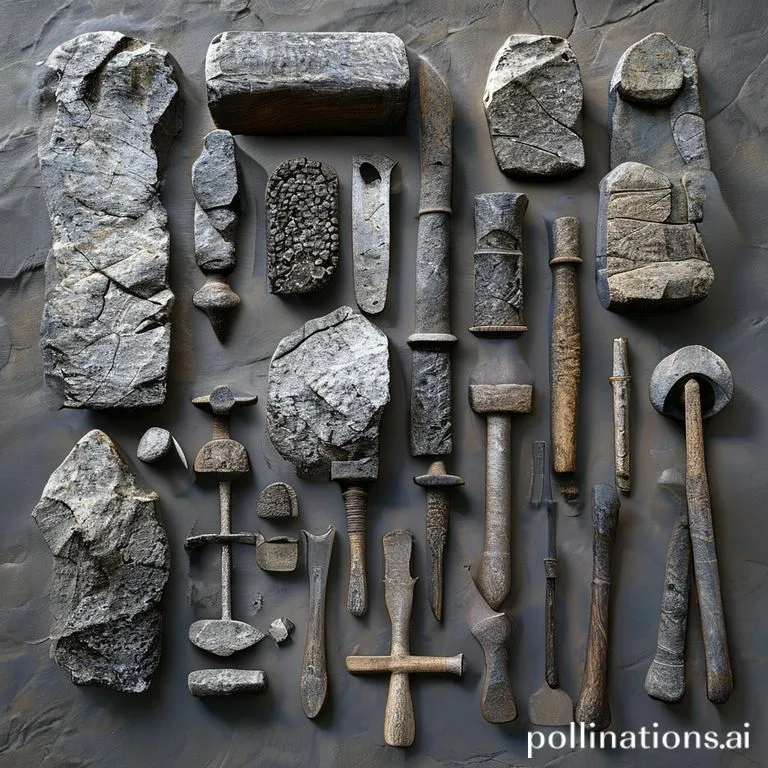
Brief description
Stone tools are objects made by knapping or polishing rocks to perform specific tasks. They represent the beginning of human technology.
Use / Function
- Cutting: Knives and flakes for processing meat, hides, or wood.
- Percussion: Hammers and axes for hitting, breaking bones, or shaping other stones.
- Scraping: For cleaning hides or working wood.
- Scale: Individual/Domestic.
Operating principle
It is based on the conchoidal fracture of certain minerals (such as flint), which allows the creation of extremely sharp edges by applying controlled impacts. The hardness of the stone allows force to be transmitted without the tool being immediately destroyed.
How to create it
- Percussion knapping: Striking a stone core with a hammerstone (another stone or bone) to remove flakes.
- Pressure knapping: Using a bone or wood tip to press against the edge and remove small blades, achieving a more precise edge.
- Technical level: Basic to Intermediate.
Materials needed
- Essential: Flint, obsidian, quartzite, or hard stones.
- Tools: Hard stone hammerstones, deer antlers, or dense wood.
- Substitutes: Any rock that breaks with sharp edges.
Variants and improvements
- Oldowan: Simple tools (choppers).
- Acheulean: More symmetrical bifacial hand axes.
- Microliths: Small blades for insertion into wood or bone handles.
- Polished stone: More durable and refined tools (Neolithic).
Limits and risks
- Fragility: They can fracture if used incorrectly.
- Risk of cutting: The edges are extremely sharp and can cause serious wounds during manufacturing or use.
- Wear: The edge is lost with use and requires re-sharpening (retouching).