NaturalGenerated with AI2 min read
Cacao & Chocolate
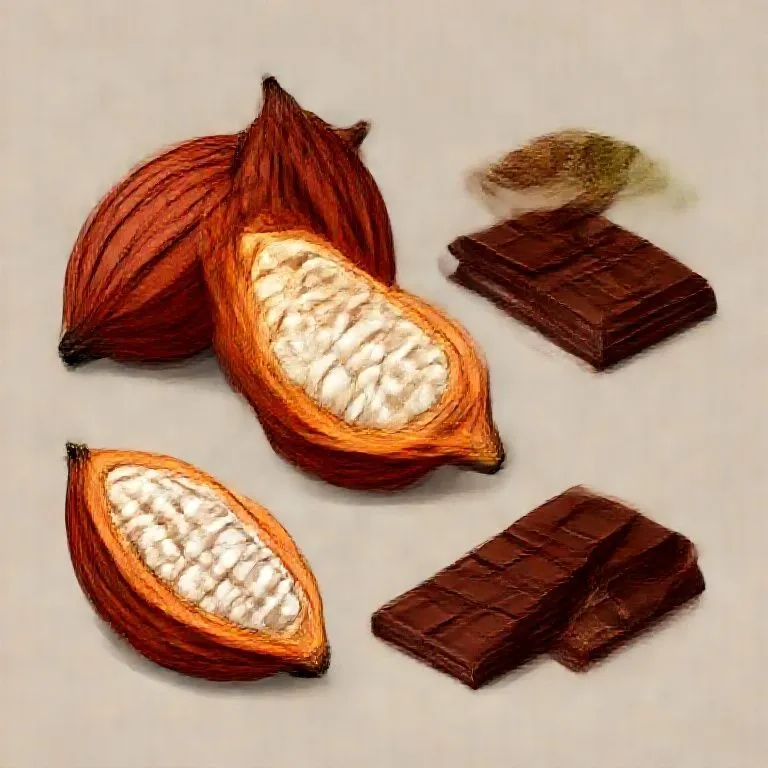
Cacao comes from the seeds of the Theobroma cacao tree. Fermented, dried, and roasted beans produce aromatic cacao; grinding and mixing with sugar creates chocolate.
Description of what it is like
Raw seeds are soft and bitter, surrounded by sweet pulp. After drying and roasting, beans turn dark and fragrant. The paste is thick and oily; tempered chocolate solidifies with a glossy, firm snap.
Origin and where to find it
- Environments: Humid tropical zones with partial shade, regular rainfall, and deep soils.
- Signs: Trees with large pods on trunk and branches, containing seeds in white pulp.
- It is a managed crop in gardens or forest systems.
Minimum processing required
- Fermentation: Builds flavor precursors and reduces bitterness.
- Drying: Stabilizes beans for safe storage.
- Roasting: Intensifies aroma and improves safety.
- Winnowing: Separates husk from bean.
- Grinding: Turns beans into cocoa liquor.
- Pressing: Optional separation of cocoa butter and cocoa powder.
- Tempering: For chocolate, sets stable crystals for shine and texture.
Tools needed to work on it
- Fermentation boxes or baskets.
- Drying racks or clean mats.
- A pan or clay griddle over Fire for roasting.
- Hand Mill or stone grinder.
- Clean Containers for storage and transport.
Common forms of use
- Hot cocoa with Water.
- Cocoa liquor for cooking.
- Cocoa powder for drinks and baking.
- Cocoa butter for food or cosmetics.
- Chocolate bars sweetened with Sugar.
Possible substitutes
Limitations and common failures
- Rancidity: Cocoa butter oxidizes with heat, light, or air.
- Moisture damage: Damp beans mold easily.
- Poor tempering: Causes white bloom or gritty texture.
Risks and safety
- Theobromine/caffeine sensitivity: Can cause jitters or insomnia.
- Pet toxicity: Chocolate is dangerous for dogs and cats.
- Burns: Roasting and hot grinding can cause injuries.
Related materials
Properties
- Seeds rich in fat (cocoa butter)
- Contains stimulant alkaloids (theobromine)
- Fermentation and roasting build aroma
- Solidifies with stable crystal structure when tempered
- Absorbs odors and moisture easily
Used for
- Hot cocoa drink
- Bars and edible paste
- Baking and sauces
- Concentrated energy source
- Ritual or trade good
Manufacturing / Process
Cocoa pods are opened, seeds are extracted, fermented, and dried. The beans are then roasted, winnowed, and ground into cocoa liquor. The liquor can be pressed to separate cocoa butter and cocoa powder, and mixed with sugar to make chocolate that is tempered for stability.