Generated with AI3 min read
Oyster Farming
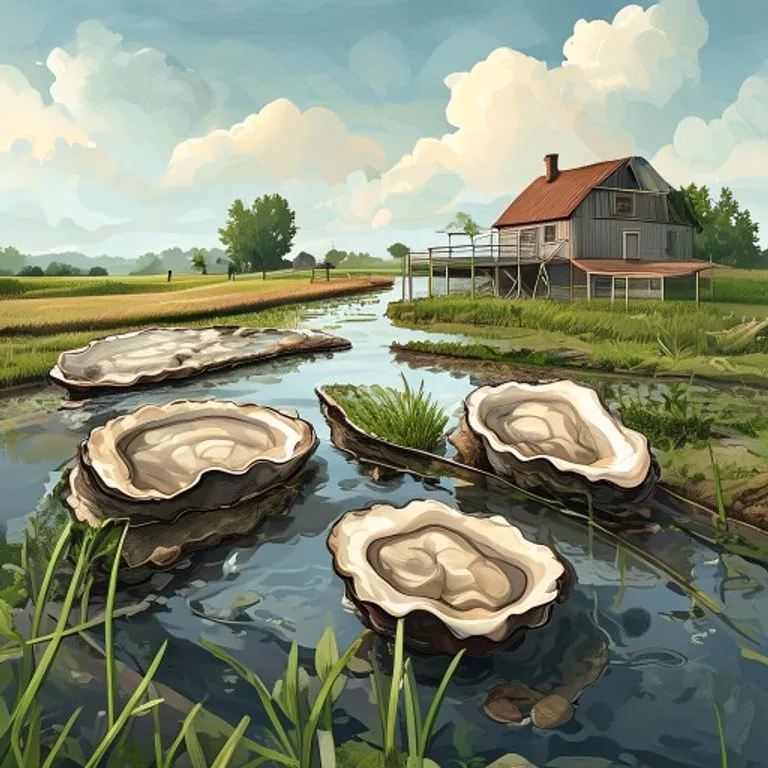
Brief description
Oyster farming is the cultivation of oysters in coastal or estuarine waters using structures that keep them in optimal flow for feeding and growth.
Use / Function
- Food supply: Provides protein and minerals with minimal land use.
- Trade: Creates a durable coastal product for exchange.
- Pearls: Produces occasional pearls for ornament and high-value trade.
- Resilience: Adds a reliable harvest that does not require daily feeding.
- Scale: From small intertidal racks to floating raft systems.
Operating principle
- Filter feeding: Oysters feed by filtering plankton from moving water.
- Suspension: Racks, bags, or lines keep shells above silt and predators.
- Tidal exchange: Regular flow brings oxygen and food and removes waste.
- Settlement: Oyster spat attach to collectors or are placed in bags.
How to create it
- Choose a site: Brackish to salty water, steady flow, low pollution, and shelter from heavy waves.
- Secure seed: Collect spat on clean shells or obtain juvenile oysters.
- Build supports: Use Wood stakes, Rope, and mesh bags or Fishing Nets.
- Stock and space: Spread seed to avoid crowding and ensure water flow.
- Maintain: Clean fouling organisms, flip bags, and repair lines.
- Protect: Use netting and elevation to reduce crab and starfish predation.
- Harvest and purge: Grade by size, then hold in clean water before eating.
Materials needed
- Essential: Water, Salt, Wood, Plant fibers, Stone for weights.
- Tools: Rope, Fishing Net, Containers, Raft or Simple Boat.
- Substitutes: Bamboo poles, woven baskets, or reed racks lined with netting.
Variants and improvements
- Bottom culture: Oysters placed directly on suitable seabed.
- Rack and bag: Bags mounted on trestles in intertidal zones.
- Longline or raft: Suspended baskets in deeper, cleaner flow.
- Grading: Periodic sorting improves uniform size and survival.
Limits and risks
- Water quality: Pollution or harmful algal blooms make oysters unsafe.
- Predation: Crabs, starfish, and birds can reduce yield.
- Storm damage: Waves can tear gear or bury beds with silt.
- Salinity swings: Heavy rain can stress or kill stock.
- Theft and access: Coastal sites are hard to secure.
Related materials
- Water: Medium for feeding and oxygenation.
- Salt: Indicates suitable brackish to marine salinity.
- Wood: Stakes, racks, and frames.
- Plant fibers: Netting and ties.
- Stone: Weights for keeping gear stable.
- Pearl: High-value byproduct from some oysters.
Related inventions
- Rope: Lines, lashings, and bag ties.
- Fishing Net: Mesh bags and containment.
- Containers: Harvest transport and rinsing.
- Raft: Floating platforms for suspended culture.
- Simple Boat: Access and maintenance transport.