Generated with AI2 min read
Raft
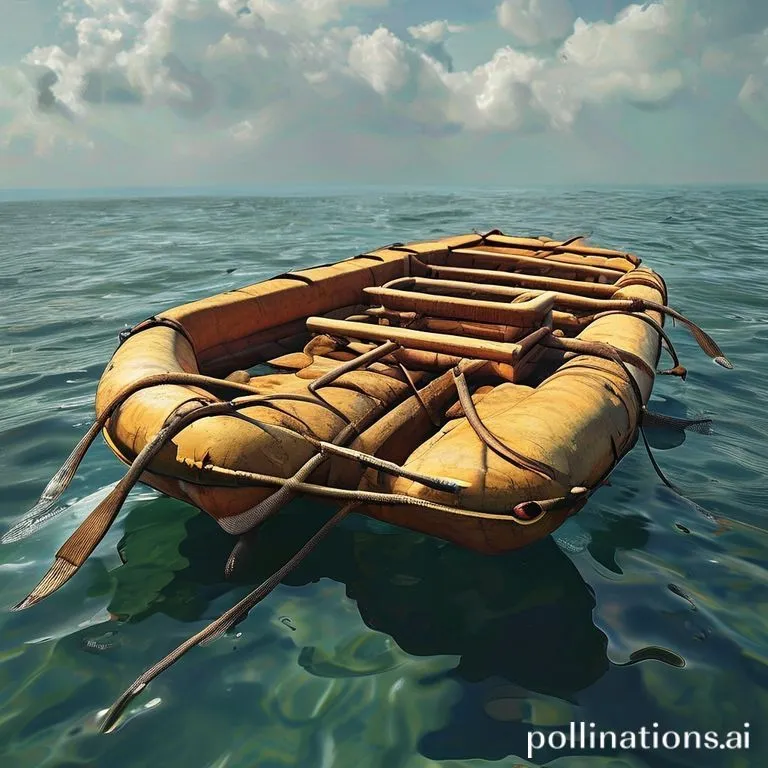
Made of
Brief description
A raft is a flat structure for support or transportation over water. It is the simplest form of watercraft, characterized by the absence of a hull. Instead, it relies on the buoyancy of its materials to stay afloat.
Use / Function
- Transportation: Moving loads or people across water bodies.
- River Crossing: Simple way to cross rivers where bridges or deep-water vessels are unavailable.
- Emergency survival: Quickly constructed floating platform.
Operating principle
Buoyancy: A raft stays afloat because it is made of materials less dense than water (like wood or air-filled bladders), or because it displaces enough water to support its weight. Unlike a boat, it does not have a hollow hull to displace water; the entire structure provides buoyancy.
How to create it
- Material Gathering: Collect buoyant materials like dry logs, bamboo, or bundles of reeds.
- Alignment: Lay the primary logs side-by-side to the desired width.
- Lashing: Use strong rope, vines, or leather thongs to tie the logs together. Typically, cross-beams are placed perpendicular to the main logs and lashed at every intersection for stability.
- Decking (Optional): Add a second layer of lighter branches or planks on top to keep passengers and cargo drier.
Materials needed
- Buoyant body: Dry logs (pine, balsa), bamboo, or reed bundles.
- Lashing: Rope (plant-fibers), vines, or leather strips.
- Tools: Axe or knife for cutting and notching.
Variants and improvements
- Log Raft: Most basic, very durable but heavy and slow.
- Bamboo Raft: Lightweight and flexible, common in many tropical regions.
- Inflatable Raft: Modern version using air-filled chambers for extreme buoyancy and portability.
Limits and risks
- Maneuverability: Very difficult to steer or propel against currents or wind.
- Structural Integrity: Lashing can loosen or break over time, causing the raft to disassemble.
- Exposure: Provides little protection from water or weather; passengers often get wet.