NaturalGenerated with AI2 min read
Pearl
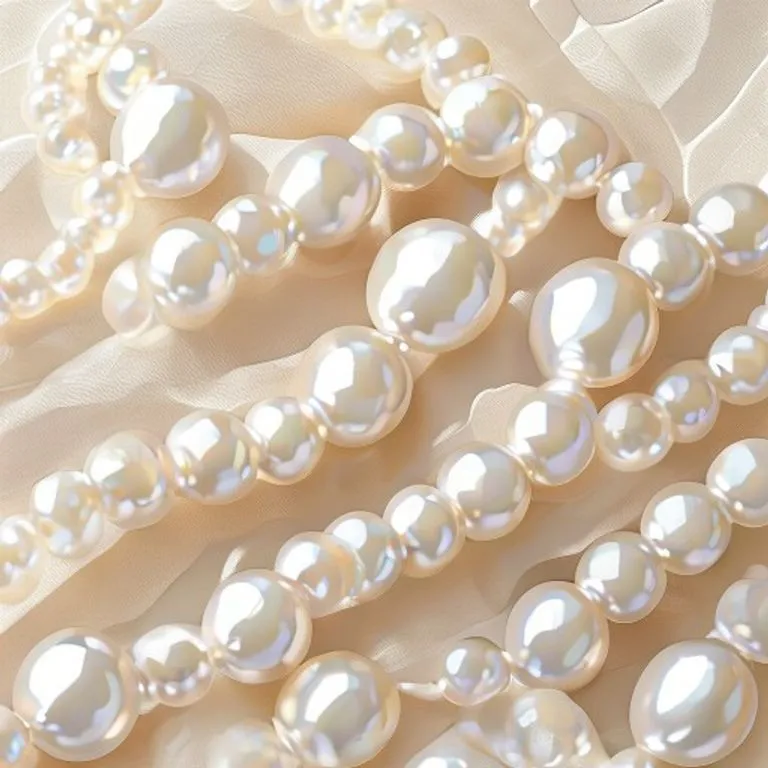
Pearl is a hard, glossy material produced by certain mollusks as they coat an irritant with layers of nacre.
Description of what it is like
Pearls are smooth, rounded or irregular nodules with a bright, pearly luster. Their surface can range from mirror-like to softly matte depending on polish and wear.
Origin and where to find it
- Environments: Coastal lagoons, estuaries, and sheltered bays with oysters or mussels.
- Signs: Healthy shellfish beds and clean, well-oxygenated water.
- It is a natural material, though many pearls are cultured.
Minimum processing required
- Cleaning: Rinse to remove salts and organic residue.
- Sorting: Grade by size, luster, and surface quality.
- Drying: Air-dry before storage.
- Drilling: Small holes for stringing, if needed.
Tools needed to work on it
- Soft cloths and sieves for cleaning.
- Fine drill or bow drill for holes.
- Abrasives for gentle polishing.
Common forms of use
- Raw: Collected and stored as trade goods.
- Polished: Enhanced luster for jewelry.
- Inlay: Set into wood, metal, or stone for decoration.
Possible substitutes
Limitations and common failures
- Acid damage: Vinegar, sweat, or acidic soils can dull or pit the surface.
- Heat and dryness: Excess heat or dehydration can crack nacre layers.
- Scratching: Softer than most stones and metals.
Risks and safety
- Dust: Drilling creates fine dust that should not be inhaled.
- Loss of luster: Oils and abrasives can permanently reduce shine.
Related materials
Properties
- Lustrous
- Layered
- Hard (Mohs 2.5–4.5)
- Sensitive to acids
- Biogenic
Used for
- Jewelry
- Trade and currency substitute
- Inlay and ornament
- Ceremonial objects
Manufacturing / Process
Formed inside oysters or mussels as nacre layers build around an irritant. Cultured pearls are made by inserting a nucleus and rearing the mollusk in clean water.