Generated with AI3 min read
Triode Vacuum Tube
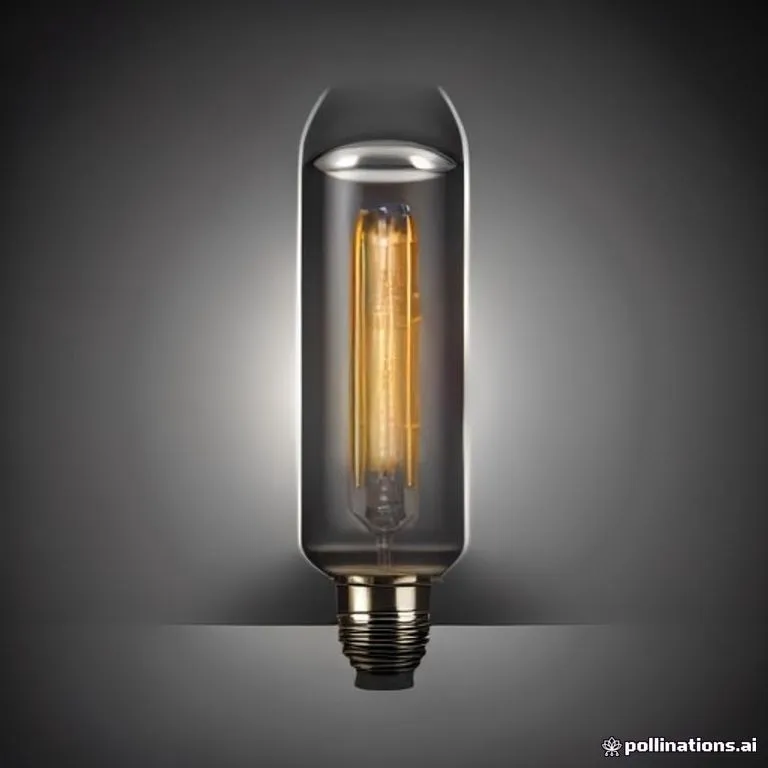
Brief description
A triode is an electronic vacuum tube containing three electrodes (cathode, grid, anode) inside an evacuated glass envelope. It was the first electronic component capable of amplifying weak electrical signals and acting as a high-speed electronic switch.
Use / Function
- Signal Amplification: Amplifies weak radio frequency signals and audio signals to driving levels for loudspeakers and transmission antennas.
- Oscillation Generation: Generates steady radio frequency carrier waves when wired in feedback circuits.
- Electronic Switching: Acts as an electrically controlled switch without moving mechanical parts for early digital computing logic.
- Scale: Laboratory, telecommunications, radio broadcasting, and early electronic computer installations.
Operating principle
- Thermionic Emission: Heating the cathode filament (made of tungsten or oxide-coated metal) causes it to boil off free electrons into the surrounding high vacuum.
- Anode Attraction: Applying a high positive voltage to the surrounding metal plate (anode) attracts the cloud of negatively charged electrons, creating a electric current.
- Grid Electrostatic Control: A fine wire mesh grid (the control grid) is placed directly between the cathode and anode.
- Voltage-Controlled Current: Small negative voltage variations applied to the control grid repel electrons, modulating or completely shutting off the heavy current flowing to the anode. Because a small voltage change on the grid controls a large current at the anode, signal amplification is achieved.
How to create it
- Form the Filament Cathode: Shape a thin Tungsten or nickel wire filament to act as the electron emitter when heated by an auxiliary low-voltage battery.
- Construct the Control Grid: Wind a delicate spiral mesh of fine nickel or Copper Wire surrounding the cathode without making direct physical contact.
- Fabricate the Anode Plate: Form a cylindrical sheet metal plate surrounding the grid-cathode assembly.
- Mount on Glass Base: Secure the three electrodes onto a glass stem with lead wires sealed through the glass.
- Enclose and Evacuate: Encase the assembly inside a Glass bulb, evacuate all internal air using a vacuum pump to prevent filament oxidation and electron collisions, and seal off the glass tube tip. Flash a barium “getter” to absorb any remaining trace gases.
Materials needed
- Envelope: High-purity Glass bulb.
- Cathode Filament: High-melting-point Tungsten or oxide-coated nickel wire.
- Control Grid & Anode: Molybdenum, nickel, or Copper sheet and Wire.
- Vacuum: Sealed glass envelope evacuated to sub-microbar pressure.
Variants and improvements
- De Forest’s Audion (1906): The primitive original triode developed by Lee de Forest with gas residue and erratic amplification.
- High-Vacuum Triode: Langmuir and Arnold’s refined design using hard vacuums and oxide filaments for stable, reproducible gain.
- Tetrode & Pentode: Multi-grid vacuum tubes adding screen and suppressor grids to eliminate parasitic capacitance and secondary emission.
Limits and risks
- Heat & Power Dissipation: Filaments require continuous heating power, wasting substantial energy and generating excessive heat.
- Fragility & Lifespan: Glass bulbs break easily under mechanical shock, and filaments eventually burn out like incandescent lamps.
- High Voltage Requirements: Anode circuits require lethal high direct current (DC) plate voltages (often 100V to 400V+).